
We Make the Precision Hardware Your Missile Programs Are Built Around

We Make Everything Around the Propulsion, Guidance & Final Assembly You Keep In-House
Fathom makes missile and rocket hardware. We don’t build energetics, propellant or warheads, and we’re not an integrator. We make the machined, turned, formed, etched and printed parts that hold all of it together, plus the tooling your factory needs to build them at rate.
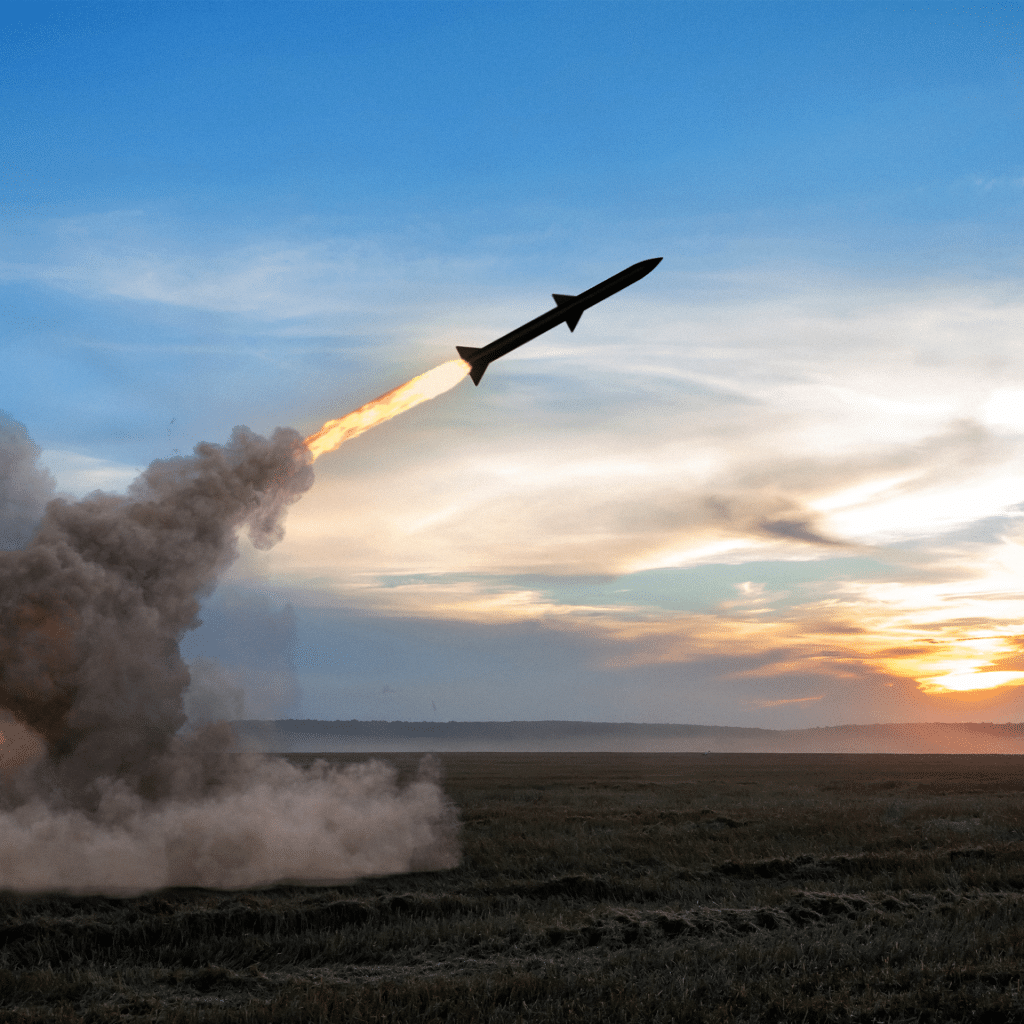
The capacity targets moved faster than the supply base underneath them. PAC-3 MSE is headed from roughly 600 rounds a year toward 2,000, THAAD from 96 to 400, AMRAAM past 1,900. Propulsion gets the capital and the headlines. What actually stalls a line is a $40 shim, a fin bracket on a six-week quote or an inspection nest nobody scoped.
That covers flight hardware: guidance and seeker housings, structural rings and interface plates, fin and actuator supports, electronics trays, thermal plates, turned spacers and bushings, and photochemically machined shims and shields.
It also covers what your factory runs on: build fixtures, inspection nests, workholding fixtures, gauges, canister and launcher support details, handling and transport hardware, ground support equipment and revision-controlled kits.
-
Flight hardware with the evidence attached. Machined, turned and formed non-energetic content delivered with material and lot traceability, first-article documentation and serialized inspection where the program specifies it.
-
Factory enablement as a deliverable. Fixtures, gauges, nests, workholding fixtures, carts and GSE designed per build station, so final assembly never waits on hardware nobody scoped.
-
ECO speed without a sourcing reset. Additive fit-checks and quick-turn CNC while the revision is still moving, then the same part carried into recurring production on the same documentation thread.
-
Domestic and documented. Seven U.S. facilities, AS9100D, ISO 9001:2015, ITAR registered, CMMC Level 2 in process.
Defense-Grade Credentials With Startup Agility

6,300+

25+

AS9100D

ITAR
Prime-Grade Documentation Without the Prime Contractor Clock
Most contract manufacturers open by pitching a missile OEM on the airframe, the motor or final integration. Those are the last three things a vertically integrated weapons factory will ever hand over, which is why the conversation stalls before it starts.
Fathom is not your propulsion source, your seeker vendor or your integrator. Fathom is the mechanical layer around all three. Four things make it work:

Multi-site domestic manufacturing across seven U.S. facilities
Selected Fathom facilities are ITAR registered, so mechanical content around motors, seekers, guidance and energetics carries no offshore exposure. Fathom Edgeworks global sourcing is used only for authorized, non-sensitive, stabilized content where program rules allow, never as a blanket offshore story.
Multi-process routing under one accountable partner
CNC, precision turning, sheet metal, photochemical machining, additive, molding, urethane casting, finishing, inspection, light assembly and kitting. A second source does not have to mean a second engineering relationship.

DFM, DFQ and DFE review before the quote
Our engineers work through tolerance and concentricity stack-up, fastener access, coating and plating stack-up, thermal paths, weight sensitivity and inspection strategy at print review, so problems surface now instead of at first article.
One quality system that holds at every rate
Revision control, lot and serial traceability and documented inspection on every order. Credentials include AS9100D and ISO 9001:2015 certification and ITAR registration today, with CMMC Level 2 in process.
Your Expert Missile & Rocket Team

Andrew Sonier

Adam Villarreal

Trey Harper

Mark Huffman

Ryan Uecker
The Line Is Rated for 2,000. The Interface Plate Is Still Rated for 600.
Air and missile defense is the clearest rate reset in the category. PAC-3 MSE is headed from roughly 600 rounds a year toward 2,000; THAAD, from 96 to 400; and AMRAAM, past 1,900. Final assembly and propulsion get the capital and the automation. The mechanical long tail around them gets a purchase order and a hope.
Fathom absorbs that long tail, so a $200 machined ring never becomes the pacing item on a multimillion-dollar round.
-
Precision flight hardware: Guidance and seeker housings, structural rings, interface plates, actuator and fin supports and electronics trays from 5-axis CNC in Round Rock and Minneapolis.
-
Flat precision content: Photochemically machined shims, shields and screens from Newark, burr-free and repeatable at lot quantities that scale with round count.
-
Line and launch enablement: Inspection nests, workholding, assembly fixtures, gauges, canister and launcher support details and handling hardware from Hartland additive and Denver sheet metal.
-
Evidence that keeps up with rate: Material and lot traceability, first-article packages and serialized inspection where the program specifies it, engineered into DFM instead of added at acceptance.

2,500 Rounds a Year Is Really Tens of Thousands of Turned Components a Year.
Mature air-to-air lines are targeting more than 1,900 AMRAAM and 2,500 AIM-9X annually. Every round multiplies into spacers, bushings, standoffs, retainers and brackets, and every export configuration multiplies it again. Tight packaging means none of those parts get looser tolerances just because there are more of them.
Fathom runs high-repeatability small-part production so component lead time never caps missile output.
-
Compact precision content: Seeker and guidance housings, structural rings, electronics frames, connector plates and thermal details from Fathom’s high-precision CNC facilities.
-
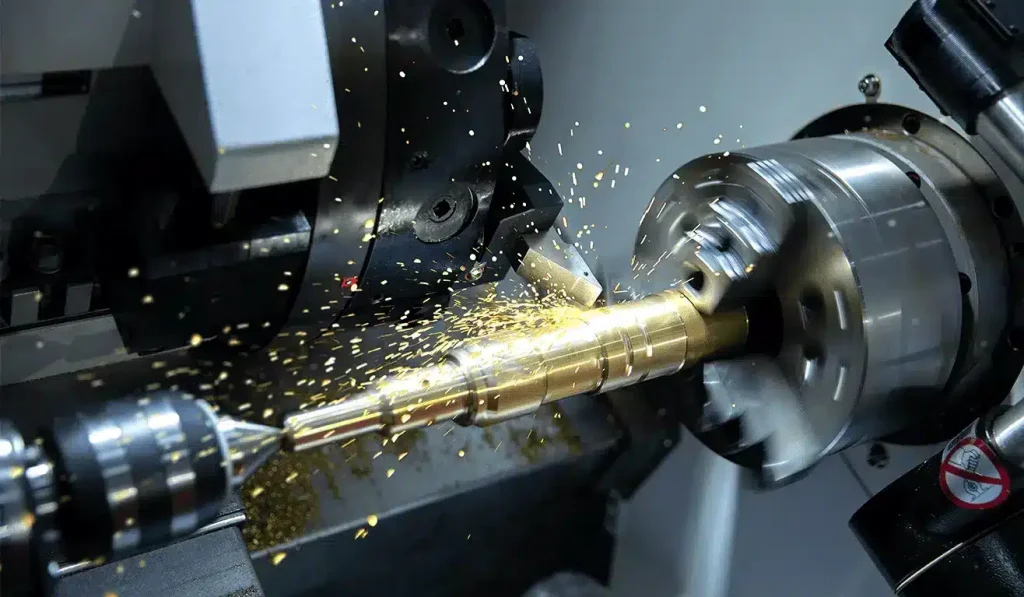
Turned details at volume: Pins, bushings, spacers, standoffs and sleeves from Fathom’s Minneapolis, MN facility, held to the repeatability that tight mechanical packaging demands.
-
Configuration control across lots: Revision-controlled runs with lot labeling and acceptance inspection, so domestic and FMS variants stay separated and documented.
-
Line tooling that scales with shifts: Assembly fixtures, alignment gauges, inspection nests and transport aids added as cells and shifts come online.
Rate Production and a Milestone C Transition Ask Your Supply Base for Opposite Things.
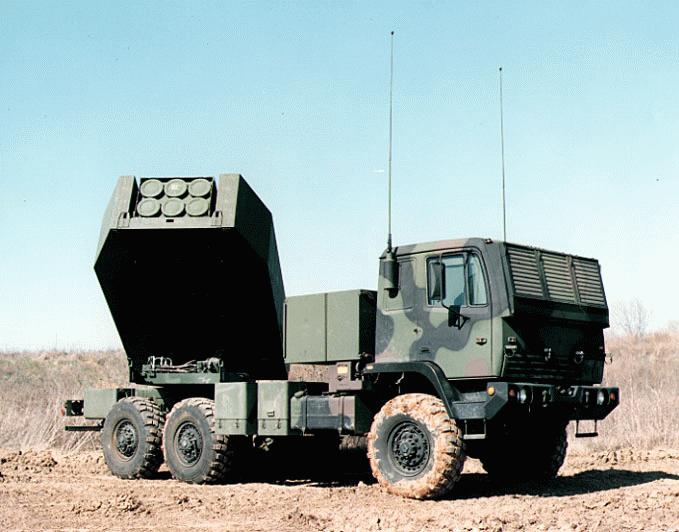
Guided rockets run at thousands of rounds a year on repeatable mechanical content and heavy launcher and pod tooling demand. Precision strike programs like PrSM are moving out of qualification into production while later increments are still changing. One side of the house needs volume and repeatability. The other needs speed and revision discipline.
Fathom carries both under the same documentation thread, which is what keeps a program from re-qualifying a supplier at every rate step.
-
Production mechanical content: Guidance-section housings, structural sleeves and interfaces, fin and actuator supports, thermal spreaders, spacers and turned details from production CNC and turning.
-
Launcher and pod hardware: Pod and launcher support details, adapter plates, access panels and rugged handling and transport supports from Fathom’s Denver, CO and Ithaca, NY sheet metal shops.
-
Qualification and transition parts: Additive fit-checks, alignment tooling, test fixtures and inspection-backed short runs from Fathom’s Hartland, WI headquarters while the increment is still moving.
-
Gauges and line tooling: Build fixtures, gauges, inspection nests and kitting as lines add cells, shifts and second sources.
The Weapon Is Qualified. The Fourth Aircraft Integration Is Not.
Standoff weapons carry dense internal mechanical content and change with every aircraft, mission variant and allied customer. Production arrives in blocks, and then a new integration reopens the packaging on hardware that is quick to redesign and slow to source.
Fathom runs the internal hardware and integration-change layer so platform work does not stall on brackets, panels and mounts.
-
Internal precision structure: Guidance and sensor housings, internal frames and brackets, equipment mounts, wing and fin support details and thermal plates from Fathom’s precision CNC and turning machinery in Minneapolis, MN.
-
Packaging and routing details: Formed sheet-metal access panels, connector and cable support hardware from Fathom’s Denver, CO and Ithaca, NY facilities, with photochemically machined shims and shields from Newark.
-
Integration and flight-test hardware: Fit-check parts, flight-test fixtures, instrumentation mounts, alignment tooling and handling and storage frames.
-
Weight and interface discipline: DFM review covering interface control, weight sensitivity, coating stack-up and environmental fit before the quote goes out.

A Bushing Is Not a Strategic Part Until 4,000 Rounds Are Waiting on It
Mature tactical weapons pair recurring replenishment demand with very high component counts per round. The individual parts are modest: sleeves, bushings, retainers, brackets, canister details. The overhead of qualifying and managing those parts across a half-dozen small shops is not modest at all.
Fathom consolidates that content under one engineering and sourcing interface, which is usually worth more to a buyer than another piece-price bid.
-
Compact machined and turned content: Guidance and seeker housings, structural sleeves, brackets, pins, bushings, spacers and standoffs from Fathom’s Elk Grove, IL turning and Austin, TX CNC operations.
-
Canister and launcher support: Launch container details, connector and access plates, retainers and rugged shipping and training hardware.
-
Flat and finished detail parts: Photochemically machined shims and shields from Fathom’s Newark, NY location, with finishing and light assembly at Hartland.
-
Kitted and labeled delivery: Assembly fixtures, inspection nests and revision-controlled kits delivered by build station rather than as loose line items.
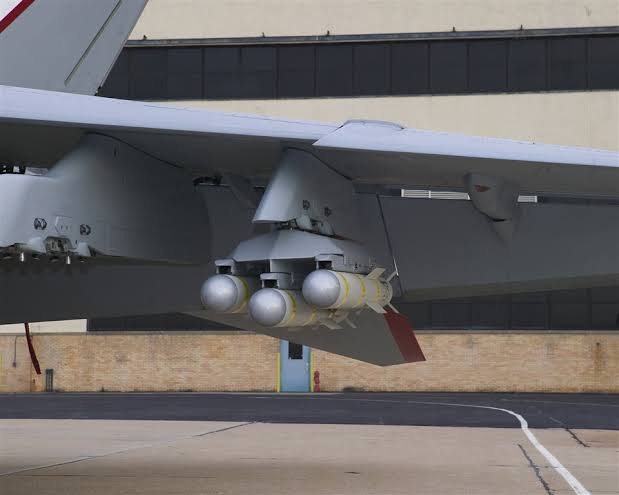
The Threat Iterates Monthly, But Your Interceptor Bracket Is on a Quarterly Release Cycle.
Counter-UAS is where replenishment demand and cost-exchange pressure land at the same time. Unit cost targets limit what a flight article can carry, while threat evolution forces mechanical changes faster than a conventional released-BOM cadence can absorb them.
Fathom holds the iteration loop tight on flight hardware, then supplies the launcher, test and field infrastructure where cost pressure is not the binding constraint.
-
Rapid ECO hardware: Additive design validation and quick-turn CNC brackets, mounts and interfaces from Fathom’s Hartland, WI and Round Rock, TX facilities, at 15 to 50 sets per iteration.
-
Interceptor mechanical content: Seeker and electronics housings, control and fin supports, motor and body interfaces, retainers and precision turned details.
-
Launcher and canister hardware: Launch tube and canister details, sheet-metal enclosures, rugged field structures and fire-control support hardware from Fathom’s Denver, CO facility.
-
Test and field support: Target and alignment aids, test fixtures, rugged cases, and field-maintenance and training kits built for repeat handling.
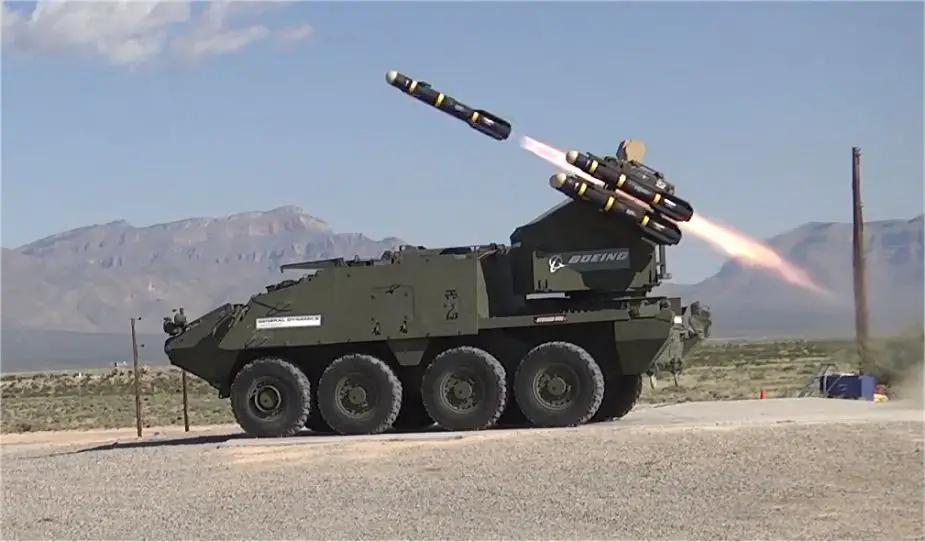
We Are Not Going to Claim Your Thermal Protection System. We Can Take Everything Bolted to It.
Hypersonic programs are moving from development into declared production, with Castelion targeting at least 500 Blackbeard rounds per year after validation. The specialized thermal, material and propulsion content stays where it is already qualified. The non-energetic mechanical, tooling and ground support content wrapped around it is a different question, and it is usually the one nobody has staffed.
Fathom leads with that layer: interfaces, housings, test hardware and GSE produced to the traceability and configuration control a flight-test program requires.
-
Non-energetic structure and interfaces: Precision rings, interface plates, avionics and guidance housings and internal supports from Fathom’s advanced CNC and turning facilities.
-
Thermal and packaging hardware: Thermal-management details outside specialized TPS scope, cable and connector supports, and photochemically machined shims and shields.
-
Test, alignment and ground support: Test fixtures, alignment tooling, shipping and handling frames and purpose-built GSE.
-
Qualification-grade documentation: High-traceability lots, first-article evidence and tight configuration control across a compressed flight-test cadence.

Case Studies


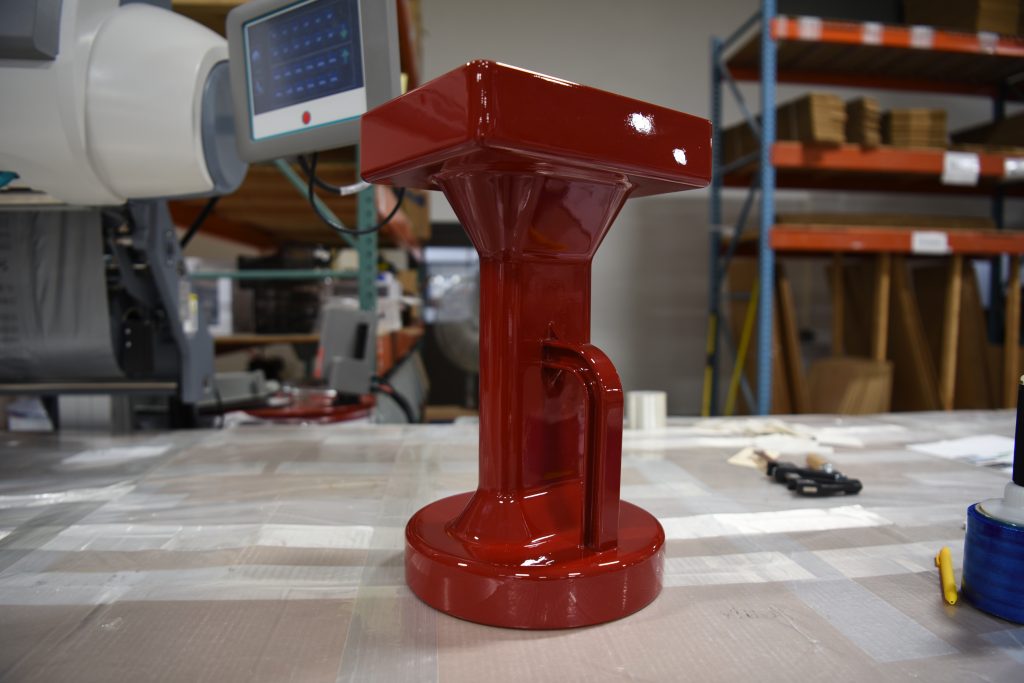
Same-Day Answers From an Engineer Who Signed Off on the Print
Fathom is not a transactional machine shop. Nor are we a broker sending you automated quotes and generic DFM feedback. On hardware that has to survive launch loads, vibration, thermal cycling and years of storage before it ever flies, the human-first approach is what makes the difference.
Our engineers review your prints for tolerance and concentricity stack-up, fastener access, coating and plating stack-up, thermal paths, weight and balance sensitivity, traceability requirements and inspection strategy. Manufacturability and acceptance problems surface at print review instead of first-article rejection.
That posture is what protects a production ramp. You get a named program contact rather than a ticketing queue, and an engineer on the phone the same day instead of three quote cycles later. Revision management, lot and serial traceability and inspection packages are built into the flow rather than bolted on at the end.
So, when an increment changes or a delivery order doubles, the mechanical layer absorbs it instead of resetting your schedule. That is white-glove service applied to defense-grade manufacturing, and it is why fast-scaling weapons programs keep coming back to Fathom.
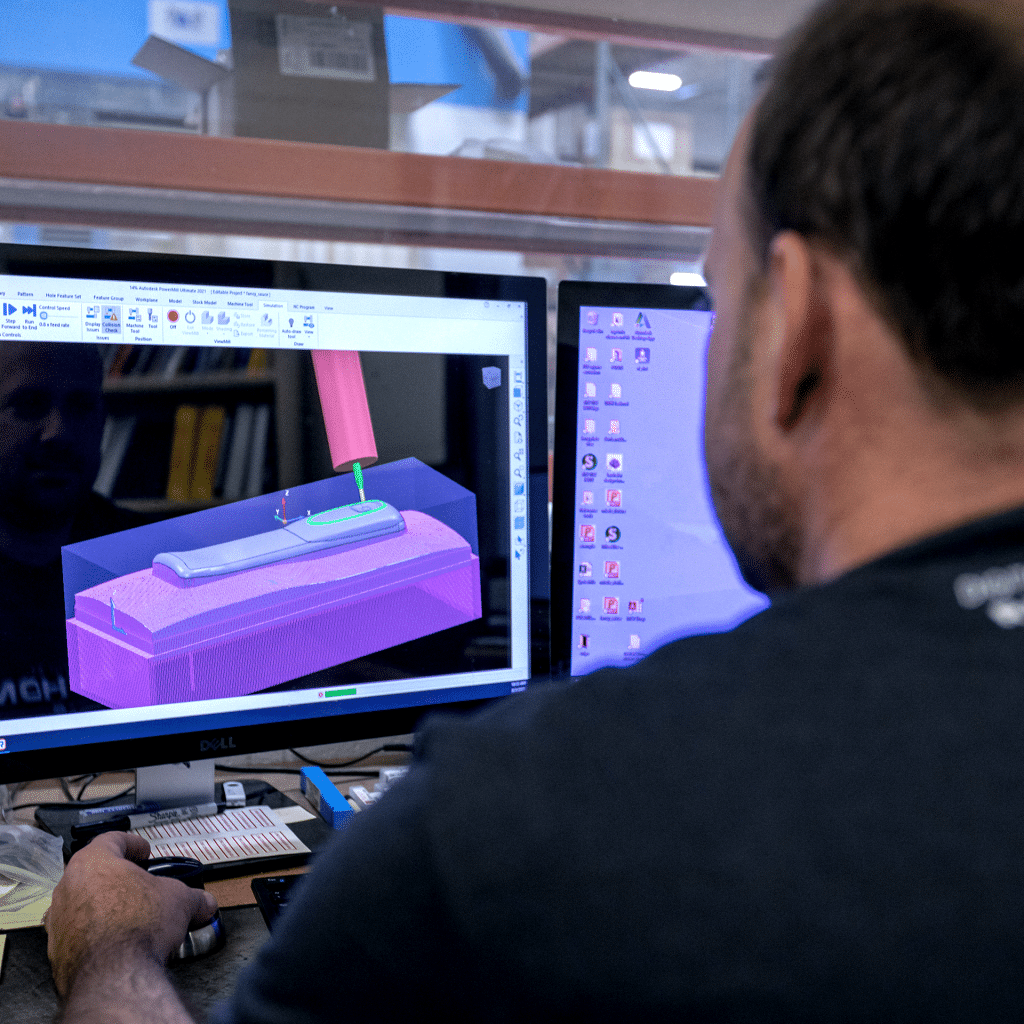
Fathom Edgeworks: Built to Support Missile & Rocket Programs
Our global sourcing solution provides missile and rocket manufacturers with access to an extended network of U.S. sourcing options through one accountable Fathom team.
Our domestic manufacturing capabilities are built to support defense weapons programs, from prototyping through qualification to recurring rate production. That includes everything from precision internal components to ruggedized housings and structural parts, all matched to the right U.S. source.
Edgeworks global sourcing is used only for authorized, non-sensitive, stabilized content where program rules allow.

What Every Missile & Rocket Program Gets With Fathom
We don’t replace propulsion, guidance or final integration. We supply the mechanical layer around them.

We Complement Your Vertical Integration
We don’t compete for your core capabilities. We take the non-energetic mechanical and factory-enablement work that consumes bandwidth without differentiating your weapon.
ITAR Registered & Multi-Site Domestic
Seven U.S. facilities, with second-source routing that does not fragment engineering intent or duplicate your qualification effort.

Factory Enablement as a Product
Assembly fixtures, gauges, nests, workholding fixtures, carts, canister and launcher support details, GSE and kitting. Not just flight parts.

DFM Before the Quote
Our engineers review tolerance stack-up, fastener access, coating stack-up, thermal paths and inspection strategy before the quote goes out.
Prototype to Bridge to Rate
One team and one documentation thread from qualification lots through recurring rate production, so evidence never restarts with the volume.

Specialty Processes in House
Photochemical shims and shields, mixed CNC, precision turning, sheet metal, additive, molding, finishing and light assembly. All under one accountable partner.