



Your Implant Earned the Clearance. Your Instruments Are Losing the Surgeon.
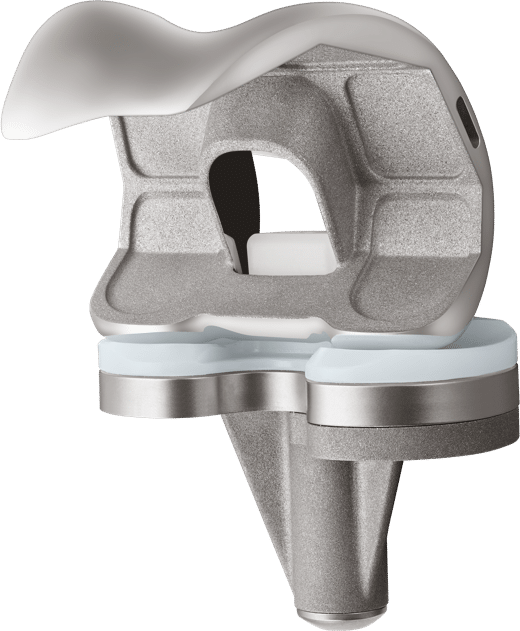
Your Implant Line Is Built for Consistency. Surgeon Feedback Isn’t.
United Orthopedic’s Taiwan factories are engineered to produce implants at volume, and that consistency is a real advantage. The hardware around those implants runs on a different clock. U.S. surgeons evaluating U2 PF+ ask for a different handle angle, a revised alignment guide or a leaner tray, and when each of those changes has to travel to Taiwan and back before anyone in Irvine can test it, the clinical calendar starts slipping.
Meanwhile, the revision side keeps multiplying. U2 PSA, the USTAR II hinge and modular limb-salvage segments create stem, augment and offset combinations that need their own trials, gauges and assembly aids, often in quantities too small to justify a production slot.
When those pieces lag, surgeon evaluations get pushed, rare-case kits go out short and expedite costs climb. New configurations also bring new inspection fixtures, and a gauge that arrives late or out of revision can reopen a validation you thought was closed.
That’s where Fathom takes the pressure off. We give your U.S. team a responsive domestic lane for the non-implant mechanical hardware around your systems, from fit-check prototypes to revision-controlled production lots, without touching the implant economics you’ve built in Taiwan.
-
Close surgeon feedback loops in the U.S. Fit-check models, prototype cutting guides and revised trial components come out of U.S. facilities, so your clinical team tests the change instead of waiting on it.
-
Support every configuration without deep tool inventory. Fathom builds trials, adapters, gauges and kit accessories in small, variable lots, so rare-case revision and limb-salvage sets stay complete.
-
Keep validation moving. Inspection nests, go/no-go gauges and first-article packages are built to your drawings and revision control, so new configurations reach sign-off with fewer dimensional surprises.
-
Add a U.S. fallback without restructuring your supply chain. Fathom works alongside your Taiwan production as a managed domestic lane, with one engineering team coordinating every process behind it.
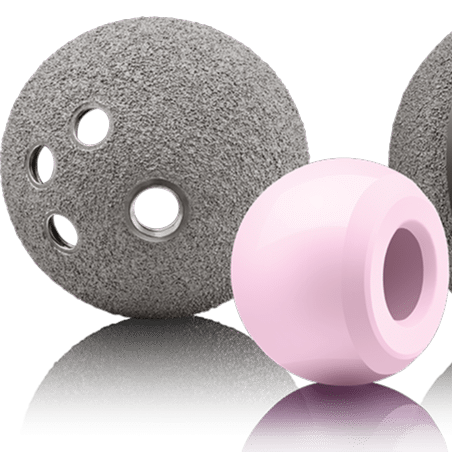
Keep Taiwan’s Implant Economics. Add a U.S. Lane for the Hardware Around Them.
Most contract manufacturers make you choose. Quick-turn shops move fast but rarely carry the documentation and revision control an orthopedic quality team expects, while production suppliers bring the paperwork but can’t absorb surgeon-driven changes without starting a new quote cycle.
Fathom delivers speed and discipline from one accountable U.S. partner, so United Orthopedic gets a domestic fallback for urgent instrument hardware without adding a new vendor to qualify for every process.
Four things make it work:
-
Domestic manufacturing across 10 U.S. locations puts a production partner in your own market, with no international freight standing between a design change and a surgeon’s hands.
-
DFM, DFQ and DFE review happens before the quote, with experienced engineers flagging tolerance stacks, instrument mating geometry, burr control and cleaning access at print review, not at first-article rejection.
-
More than 30 manufacturing technologies, including precision CNC, precision turning, photochemical machining, sheet metal, additive, molding, finishing and inspection, run as one coordinated program instead of a chain of separate vendors.
-
White-glove service is the default, with the same team and documentation thread carrying a fit-check set through revision-controlled production lots.
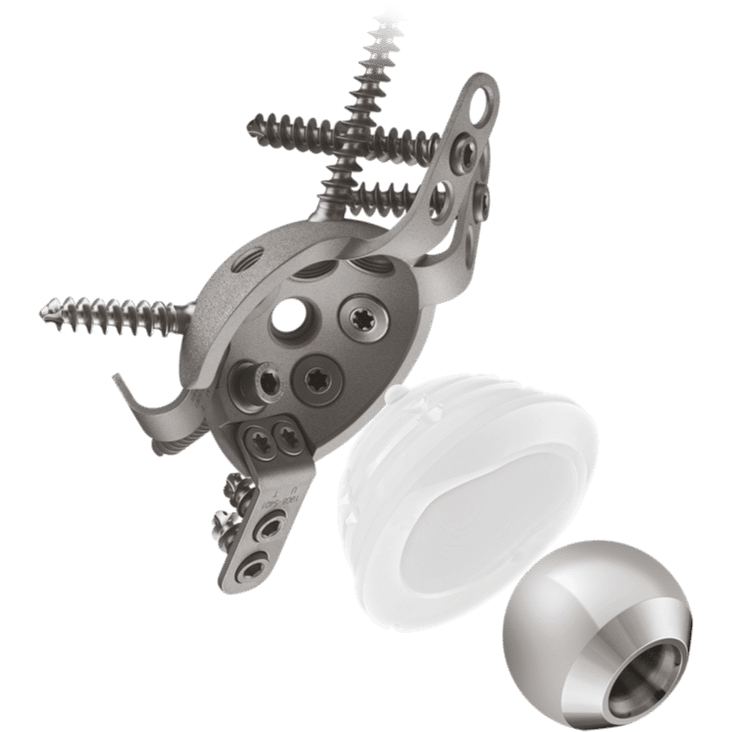
Our Expertise – By the Numbers

3,500+

30+

100+

ISO13485:2016
Meet Your White Glove Team

Pamela Melton-Arroyo
Additive Manufacturing for Medical Parts
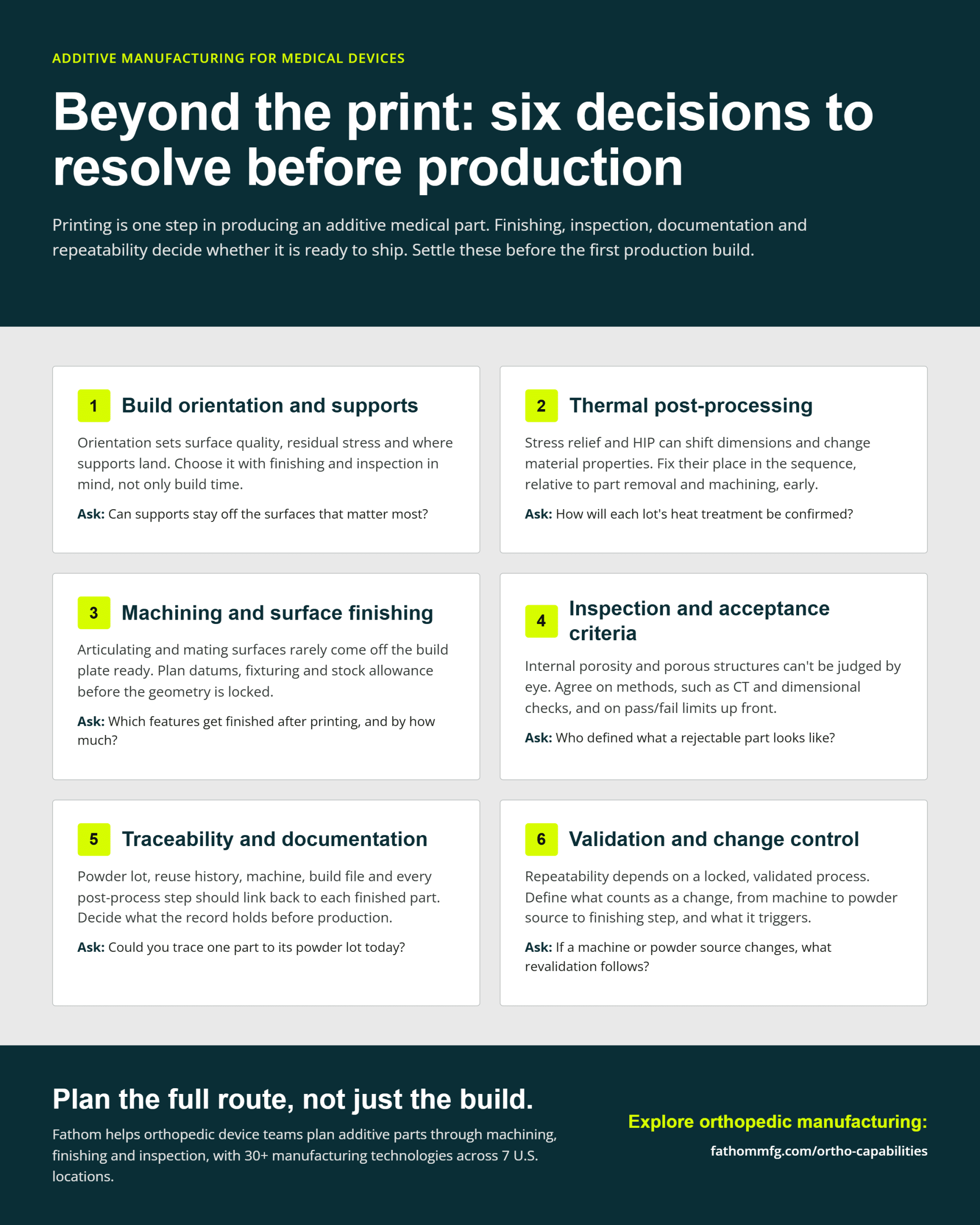
6 Decisions You Must Make Before Production
Printing an additive metal part for a medical application is only the first step. Decisions you make regarding finishing, inspection and documentation determine whether it’s ready to ship. Here are six questions you must ask prior to production.

Surgeon-Driven Instrument Changes Without Interrupting the Implant Line
U2 PF+ brings press-fit geometry and a newly cleared PF+ patella to U.S. surgeons, while U2 AiO and modular disposable trials keep reshaping the instrument set around them.
Fathom builds the hardware those changes touch: reusable cutting guides, alignment blocks, femoral-block inserts, tibial preparation aids, sizing tools, trial-system manufacturing aids, inspection nests, tray supports and launch tooling.
-
Hartland, WI: Additive fit-check models, polymer trial prototypes, prototype guides, CNC fixtures and light assembly for fast surgeon-feedback iterations.
-
Austin, TX / Minneapolis, MN: Precision CNC cutting guides, tibial preparation aids, tooling plates and inspection nests in aluminum and stainless.
-
Elk Grove, IL / Newark, NY: Precision turned locating pins, bushings and spacers, plus burr-free photochemically machined shims.
-
Denver, CO / Ithaca, NY: Instrument trays, holders, covers and pilot sheet-metal details.
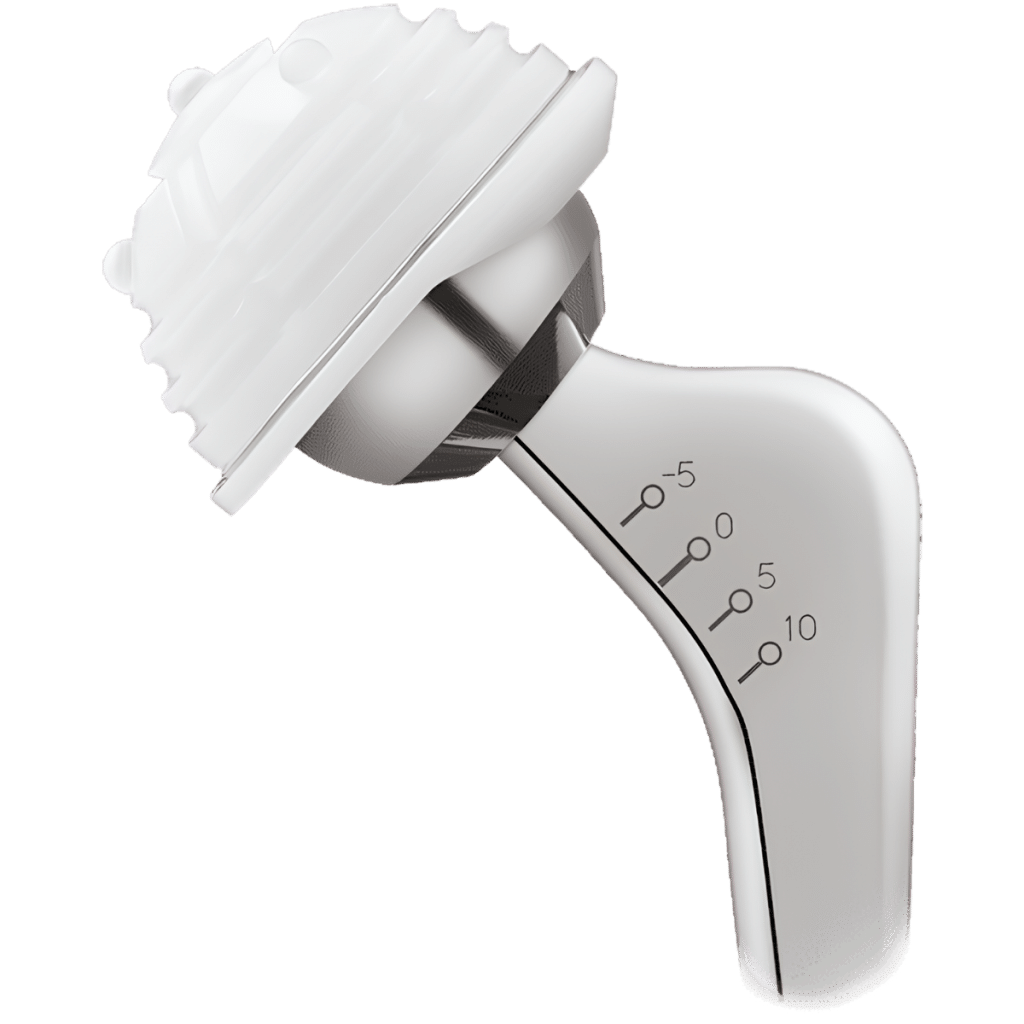
Every Stem & Cup Family Supported Without Tooling Up for Each Size.
U-Motion II PLUS cups, UTS, UTF and U2 stems and hip revision sets each carry their own trial and preparation interfaces, and low-volume variant demand makes dedicated tooling hard to justify for every size.
Fathom produces the precision content around them: broach guides, trial components, reamer fixture details, alignment sleeves, measuring gauges, handling fixtures and reusable tray hardware.
-
Austin, TX / Minneapolis, MN: Precision CNC broach guides, trial components, reamer fixture details and measuring gauges
-
Elk Grove, IL: Precision turned instrument pins, sleeves, spacers and alignment features held to tight concentricity.
-
Hartland, WI: Polymer fit-checks, CNC fixtures and ergonomic instrument iterations.
-
Denver, CO / Ithaca, NY: Instrument-tray brackets, preparation aids and accessory holders.
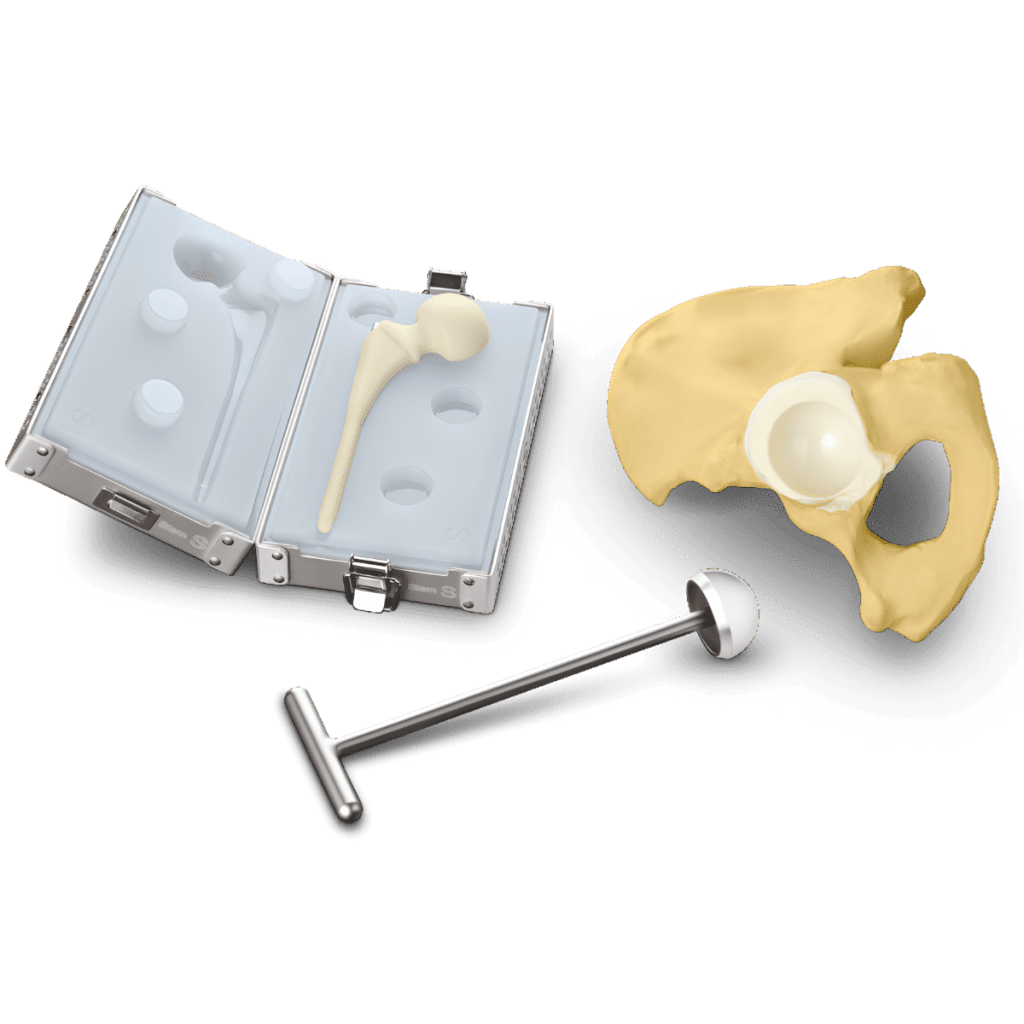
Ready for the Rare Case Without Stocking Every Tool for It
U2 PSA stem extensions, the USTAR II rotating hinge and modular limb-salvage segments give surgeons options for bone-loss and oncology cases, and every stem, hinge and augment combination multiplies the trials, gauges and assembly aids behind it.
Fathom builds revision-specific trials, trial adapters, modular instrument guides, nested assembly tools, dimensional test fixtures, set organizers and urgent replacement tool parts in small, variable replenishment lots.
-
Austin, TX / Minneapolis, MN: CNC trial adapters, modular instrument guides, nested assembly tools and dimensional test fixtures.
-
Elk Grove, IL: Precision turned pins, concentric sleeves, bushings and spacers.
-
Newark, NY: Burr-free photochemically machined shims and thin precision alignment elements
-
Hartland, WI: Additive models, trialing concepts, fixture builds and finishing.
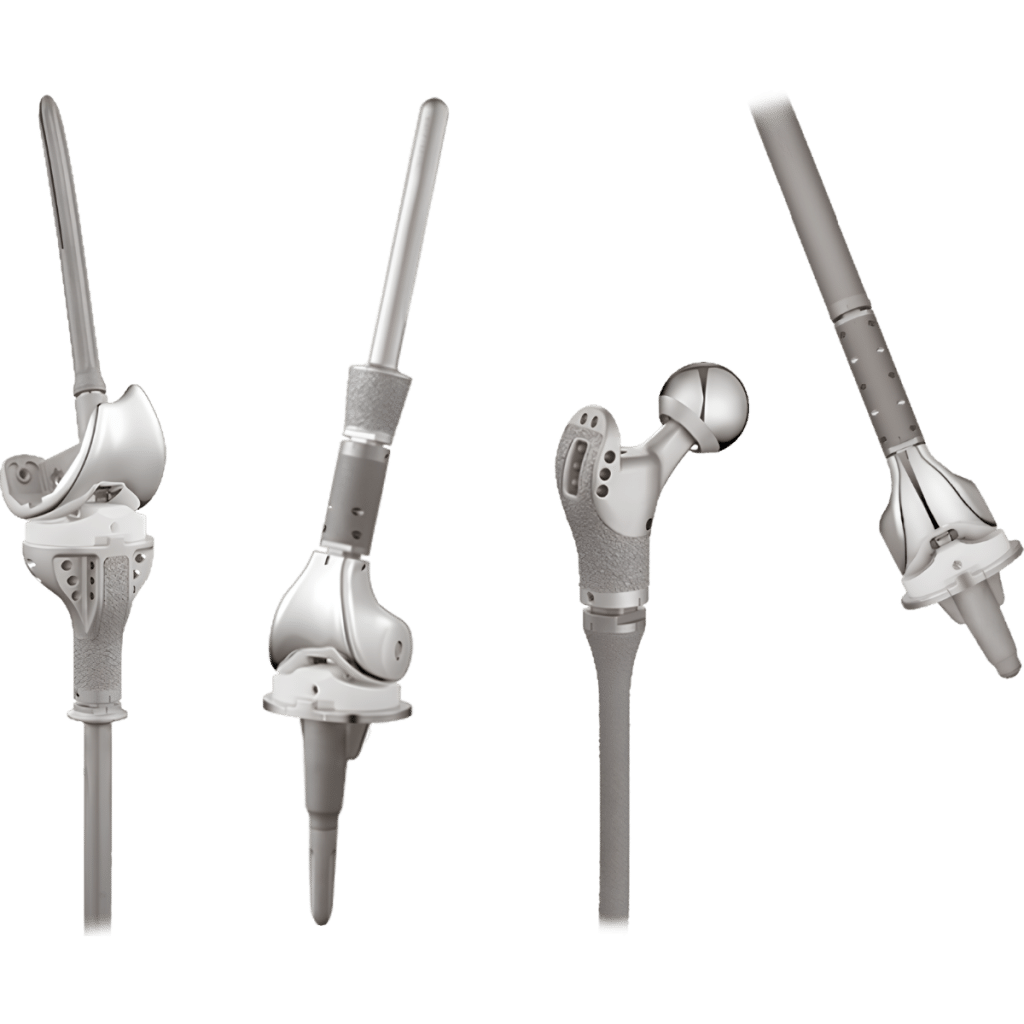
Leaner OR Trays & Complete Demo Kits Wherever Surgeons Train
U2 Knee AiO and modular disposable trials are built to cut tray counts and sterilization effort, and every launch needs demo sets, training aids and evaluation kits in surgeons’ hands on schedule.
Fathom supports that workflow layer: mold-ready trial prototypes, instrument trays and carriers, ergonomic handles, demonstration stands, non-sterile case hardware, calibration fixtures and overflow sourcing.
-
Hartland, WI: Rapid polymer and metal prototypes, mold pilots, ergonomic demo parts, finishing and kitting.
-
Denver, CO / Ithaca, NY: Fabricated trays, sheet-metal instrument carriers, brackets and handling accessories.
-
Austin, TX / Minneapolis, MN / Elk Grove, IL: Precision guides, tooling, pins and instrument components for training and evaluation sets.
-
Global Network: Injection-mold tooling and production for non-implant trial and tray components once repeat quantities justify tooling.
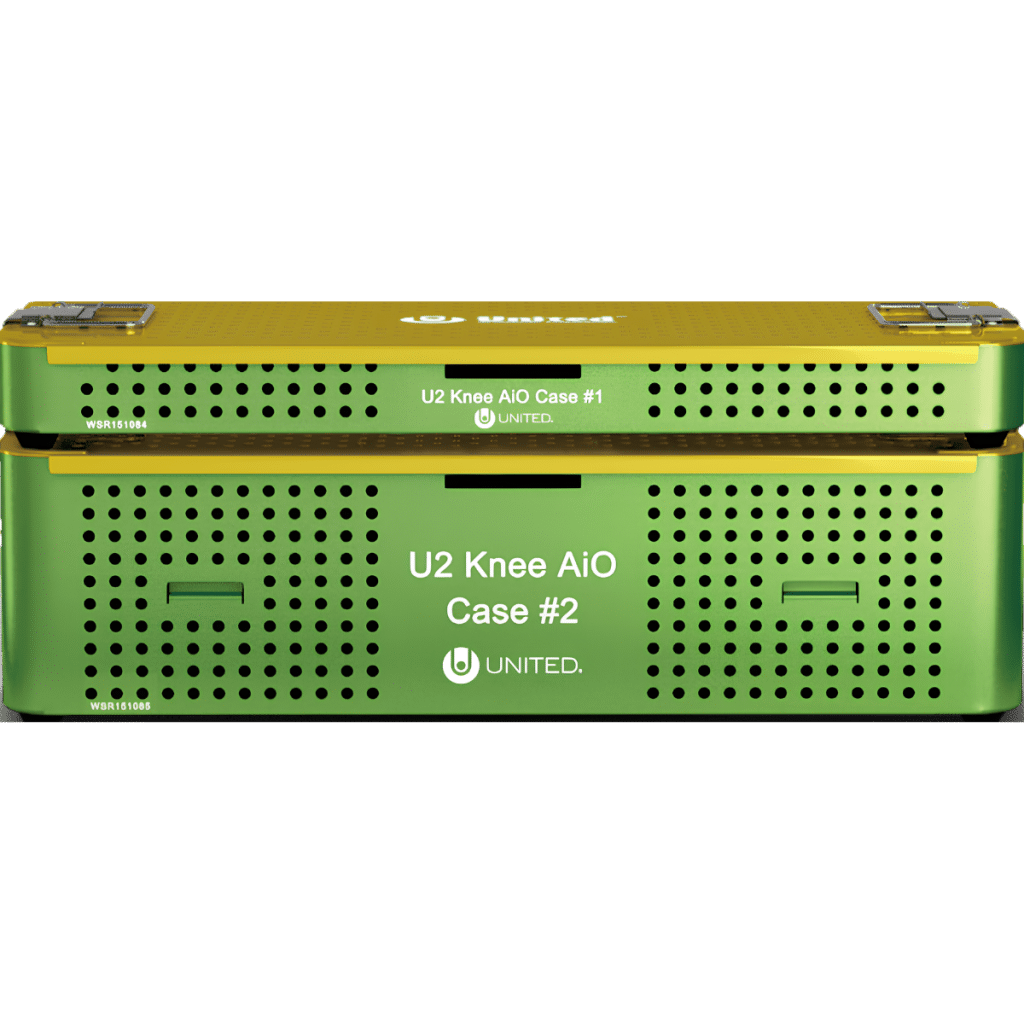
We’re Already Building the Instrument Hardware That Looks Like Yours
Fathom has supported more than 100 medical device manufacturers and delivered over 3,500 medical device components, including mechanical content for an orthopaedic OEM that moved its instrument components to Fathom after they slowed a new product launch, and supporting hardware for a robotic surgery system launch.
Fathom doesn’t build implants or validated implant coatings. We’re the responsive mechanical layer around them, and the part types you need next are the ones we’re already making:

CNC Machining
Precision CNC-machined hip and knee instrument content, including handles, adapters, trial components, drill-guide details and cutting-guide features.
CNC Turning
Precision turned pins, bushings, sleeves and spacers for instrument alignment and modular interfaces, plus burr-free photochemically machined shims and masks.

Workholding & Validation
CMM fixtures, inspection nests, gauges and validation hardware for new product introductions and design-change programs.

Sheet Metal Fabrication
CMM fixtures, inspection nests, gauges and validation hardware for new product introductions and design-change programs.
Case Studies
Tolerance Questions Get Answered at Print Review, Not at First Article.
Fathom isn’t a transactional machine shop, and on instrument systems where one guide has to mate with dozens of implant sizes, that difference matters. Every United Orthopedic job runs through DFM, DFQ and DFE engagement before quoting.
Real engineers review your prints for tolerance stacks, instrument mating geometry, edge breaks and burr control, cleaning and reprocessing access, and the inspection approach, so manufacturability issues surface before a part is cut.
That posture is what keeps instrument programs moving. You get a named program contact rather than a ticketing queue, and an engineer on the phone during your U.S. team’s workday. Revision management, first-article documentation and inspection packages are built into the flow from the start instead of bolted on at the end.
So when a surgeon evaluation drops a new ECO, the hardware around your implants keeps pace instead of resetting. That’s white-glove service applied to orthopedic manufacturing, and it’s why medical device engineering teams keep coming back to Fathom.
Global Cost for Mature Parts, With One U.S. Team Accountable for All of It.
Fathom Edgeworks is our global sourcing solution, giving orthopedic manufacturers access to an extended network of U.S. and overseas sourcing options through one accountable team.
For United Orthopedic, that means stable-volume, non-implant content such as molded trial components, tray inserts, ergonomic handles, urethane-cast parts and extrusions can move to the most economical source once the design settles, while the same Fathom engineers who prototyped it keep ownership of fit, documentation and revision control.
Affordable overseas options come with a guarantee of the lowest landed cost, so you get global economics without managing another supplier relationship across another time zone.

What Every United Orthopedic Instrument Engineer, Sourcing Lead & Clinical Launch Manager Gets With Fathom

Domestic Multi-Site Network
Seven U.S. locations put precision CNC, turning, sheet metal, additive and finishing in your market.

30+ Manufacturing Technologies
10 U.S. locations put precision CNC, turning, sheet metal, additive and finishing in your market.
DFM Before Quote
Engineers review tolerance stacks, mating geometry, burrs and cleanability before pricing.
Inspection Discipline Built In
First-article reports, dimensional inspection, material certs and lot traceability ship with the parts.
ECOs Without Lead-Time Resets
Revision-controlled changes absorbed as surgeon feedback comes in.
Prototype-to-Production Continuity
One named team from fit-check model to recurring production lot.