Orthopaedic Instruments, Kits & Launch-Set Overflow
-

CLIENT
Orthopaedic Medical Device OEM
-

INDUSTRY
Medical
-

CAPABILITY
Engineering & Design Support, CNC Machining, Additive Manufacturing, Sheet Metal Fabrication, Injection Molding, Assembly & Finishing, Inspection Services

Faster launch-set readiness

Reduced load on internal machining

Audit-ready documentation
Keeping Orthopaedic Instrument Sets Moving as Surgeon Feedback Evolves
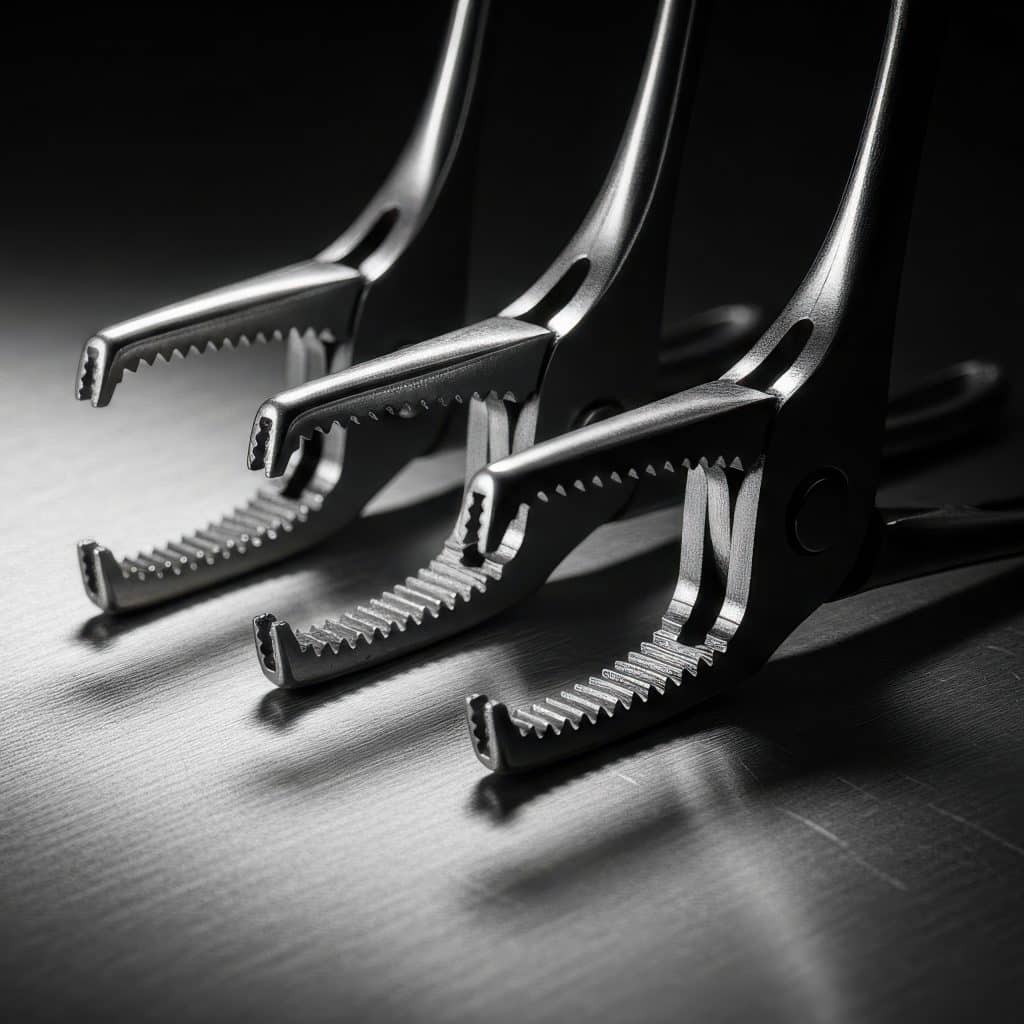
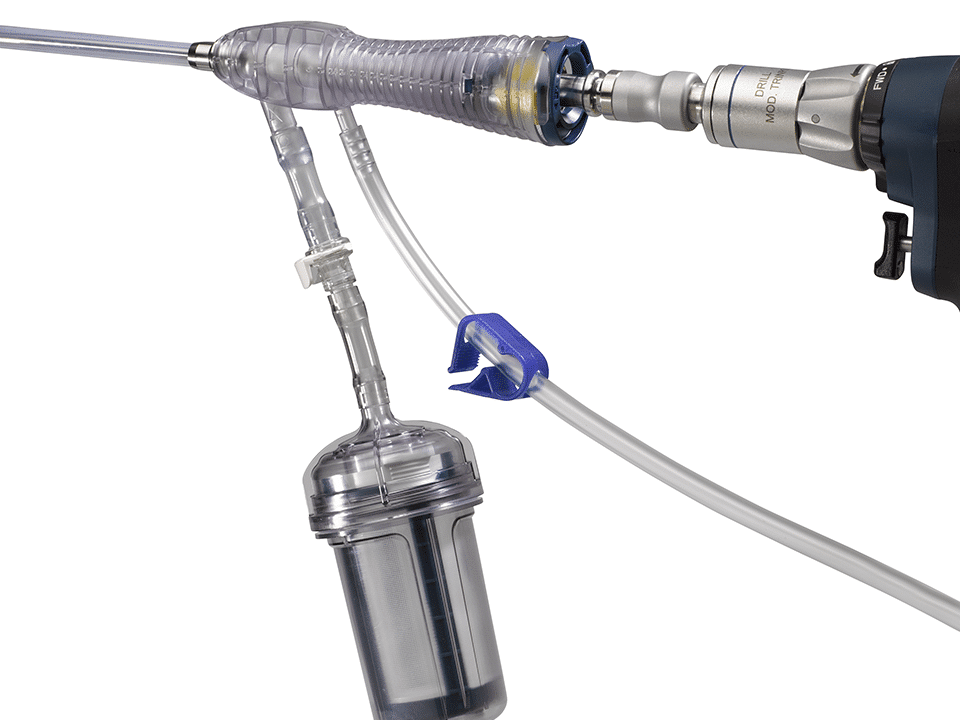
An orthopaedic OEM was rolling out new procedure-specific instrument sets across its hip, knee, trauma, extremities and spine portfolios, with ongoing revisions driven by surgeon feedback and expanding robotic-assisted workflows. While implants and the highest-value instrumentation remained in-house, the surrounding mechanical content — handles, adapters, trial hardware, drill guides, reference features, trays and kit hardware — had become the bottleneck during new-set launches and refreshes. The customer needed a domestic manufacturing partner that could absorb this revision-heavy work with the speed, documentation discipline and multi-technology reach that a single internal plant couldn’t sustain on its own.
The Problem
-
In orthopaedic surgery, instrument sets and launch-set hardware are inseparable from implant performance. Surgeons expect instruments to feel right in the hand, trays to lay out cleanly in the OR, and every guide, adapter and reference feature to land exactly where the procedural workflow requires it.
-
As robotic-assisted workflows expand into new anatomies and new procedures, even modest changes to an implant or technique triggered cascading updates to the surrounding instrumentation: new handles, revised adapters, additional trial hardware and refreshed tray layouts.
-
For this OEM, the challenge wasn’t the implant. It was the volume of revision-heavy mechanical work surrounding it. Internal machining and fixture capacity were prioritized for core instrument platforms, leaving new-set launches competing for time.
-
Traditional tooling paths were too slow for frequent surgeon-driven iterations, and stretching overseas suppliers on every revision created documentation and lead-time risk.
-
The result was a familiar launch pattern: late-breaking ECOs, delayed validation builds, tray hardware arriving out of sequence, and program managers absorbing schedule pressure that should never have reached them.

The Solution
Fathom stepped in as a coordinated, multi-site extension of the customer’s engineering and operations teams.
Elk Grove, IL, Minneapolis, MN and Round Rock, TX supplied precision-machined stainless, titanium, aluminum and engineering-plastic instrument components — handles, adapters, trial hardware, drill-guide details, turned features and tight-tolerance interface parts.
Ithaca, NY fabricated instrument trays, brackets, guards, laser-cut panels for kits, carts and production support.
Hartland, WI supported rapid additive prototypes, surgeon-evaluation models, drill-guide iterations, molded ergonomic parts and the validation fixtures needed to stabilize each new set.
Across all sites, Fathom delivered a single coordinated domestic path for prototype refinement, bridge production and launch-set overflow, with FAI-style documentation, serialized lot control and dimensional reports that matched the customer’s quality expectations.
Scope ran to hundreds of handle, tray and fixture parts across integration, validation and manufacturing-transfer workstreams, plus dozens of inspection nests, assembly aids, drill-guide fixtures and kit-layout tools.
Instead of forcing core instrument plants to absorb every surgeon-driven revision, Fathom helped isolate the most iterative mechanical content and move it forward with better speed, manufacturability input and change-control traceability.
The Results
-
With Fathom absorbing the revision-heavy instrument and tray work, the customer gained a lower-friction path from surgeon feedback to stable launch builds.
-
Engineering teams closed ECOs faster, new-set launches stayed on schedule, and validation builds arrived with the documentation packages that supplier-quality and regulatory teams needed on day one.
-
Internal machining and fixture capacity stayed focused on the core instrument platforms where they added the most value.
-
Just as importantly, Fathom gave the customer a practical second-source and bridge-production option for categories where surgeon-driven demand can outpace legacy supplier capacity, without compromising the audit-ready discipline that orthopaedic programs require.
-
The outcome was a more resilient launch model for procedure-specific instrumentation, reduced schedule risk on new-set rollouts, and a coordinated domestic partner capable of scaling with the customer’s orthopaedic and robotic-assisted roadmap.