Your Autonomy Is Only as Tough as the Hardware Carrying It
Great Autonomy Can Still Fail on a Bad Bracket
You’re building an autonomous system, and most of your engineering hours go into perception, planning and behavior. That’s where your competitive edge lives.
But once the platform leaves the lab, the mechanical layer decides whether it survives the battlefield. That includes the mounts, housings, structures and thermal hardware that hold the autonomy together.
Those critical “behind-the-scenes” components need to survive dust, moisture, vibration, environmental extremes and other battlefield threats that ruthlessly destroy parts never engineered to live there.
When that layer is treated as an afterthought, it tends to show up as:
- Sensors that drift out of alignment under vibration or shock
- Electronics that fail once dust, water or salt spray gets past a seal
- Late payload changes that reset the mechanical build, and the schedule along with it
- Corrosion or fatigue that pulls fielded assets out of service early
The stakes are rising. The Department of War is pushing to field autonomous systems faster across the Joint Force, and the Army’s new Futures and Autonomous Systems Command (FASCOM) puts autonomy at the center of its modernization plans.
More of these platforms are headed to the field, and they’ll need rugged hardware built to stay there.
See What Each Environment Demands
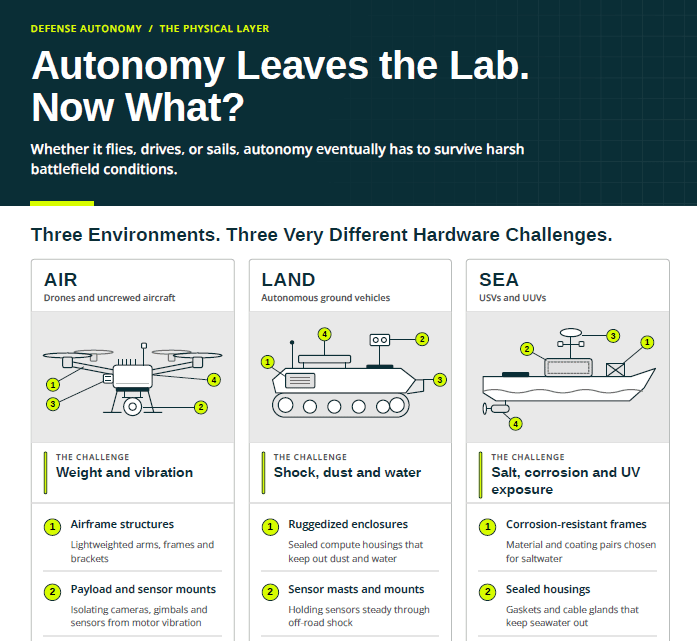
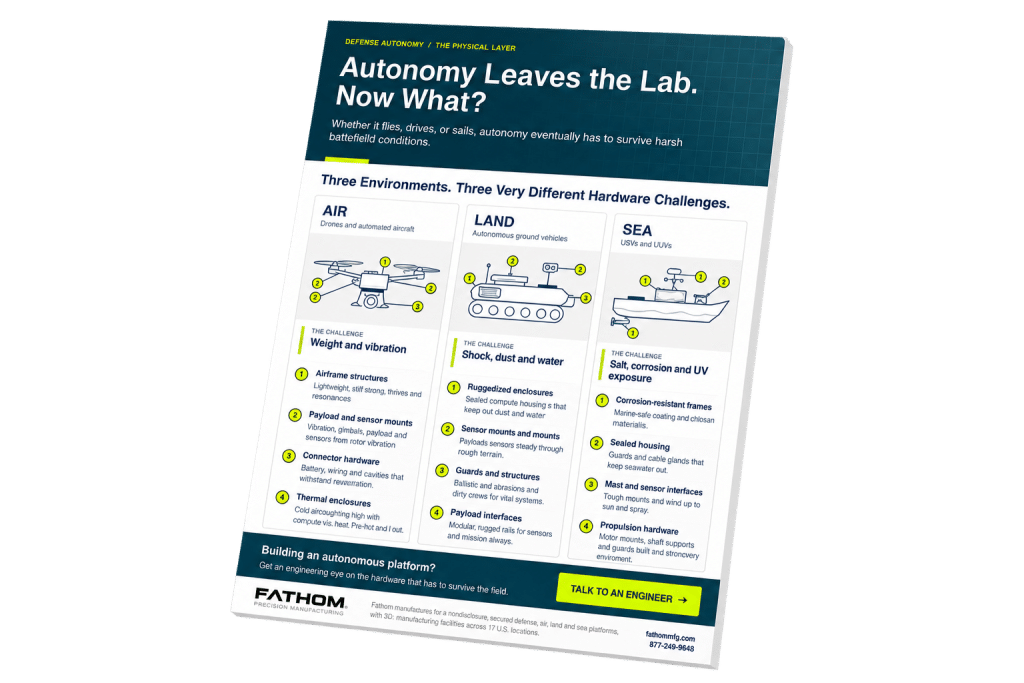
Our new one-page guide breaks down the hardware challenges unique to each domain where autonomy operates:
- Air: Weight and vibration drive the design of airframe structures, payload and sensor mounts, connector hardware and thermal enclosures.
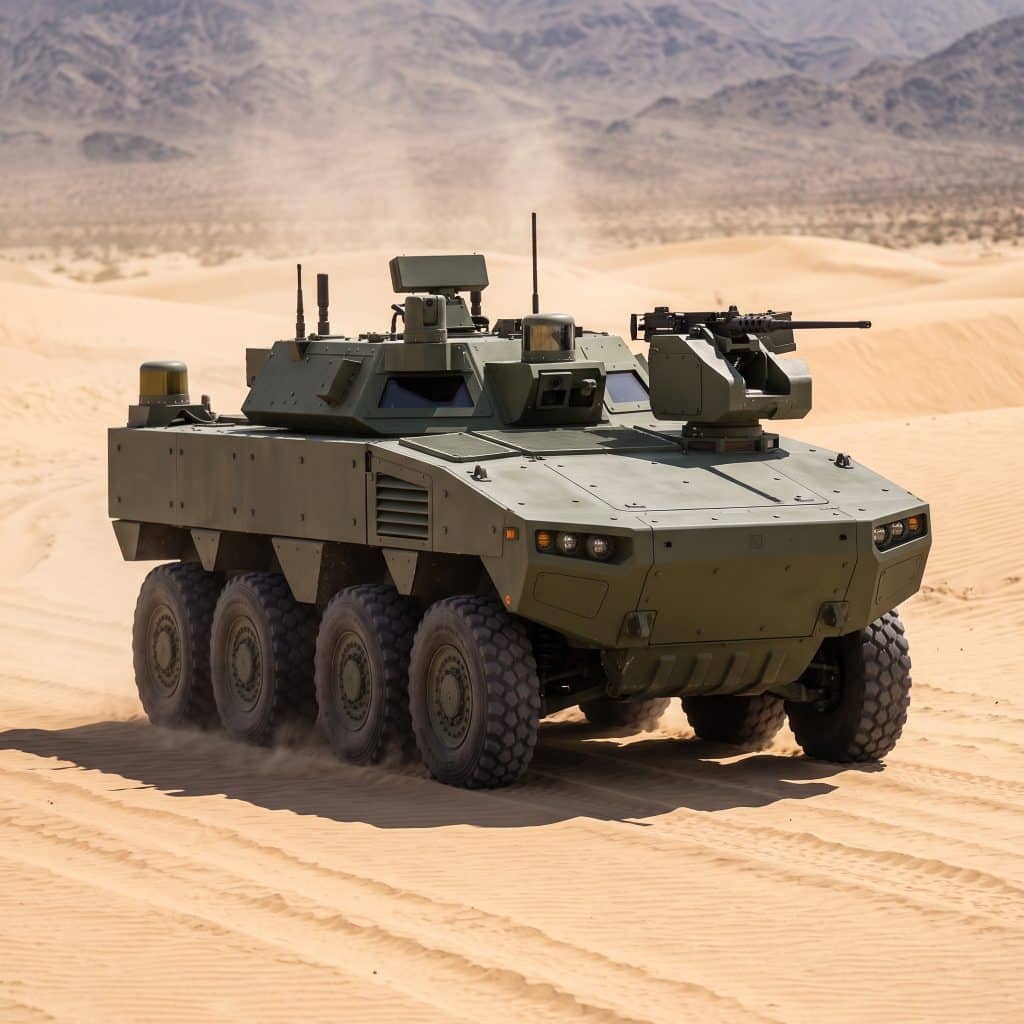
- Land: Shock, dust and water put ruggedized enclosures, sensor masts, guards and payload interfaces to the test.
- Sea: Salt, corrosion and UV exposure demand corrosion-resistant frames, sealed housings, durable mast interfaces and propulsion hardware.
It’s a quick, visual way for engineering and program teams to pressure-test the mechanical layer early, while design changes are still easy and inexpensive to make.