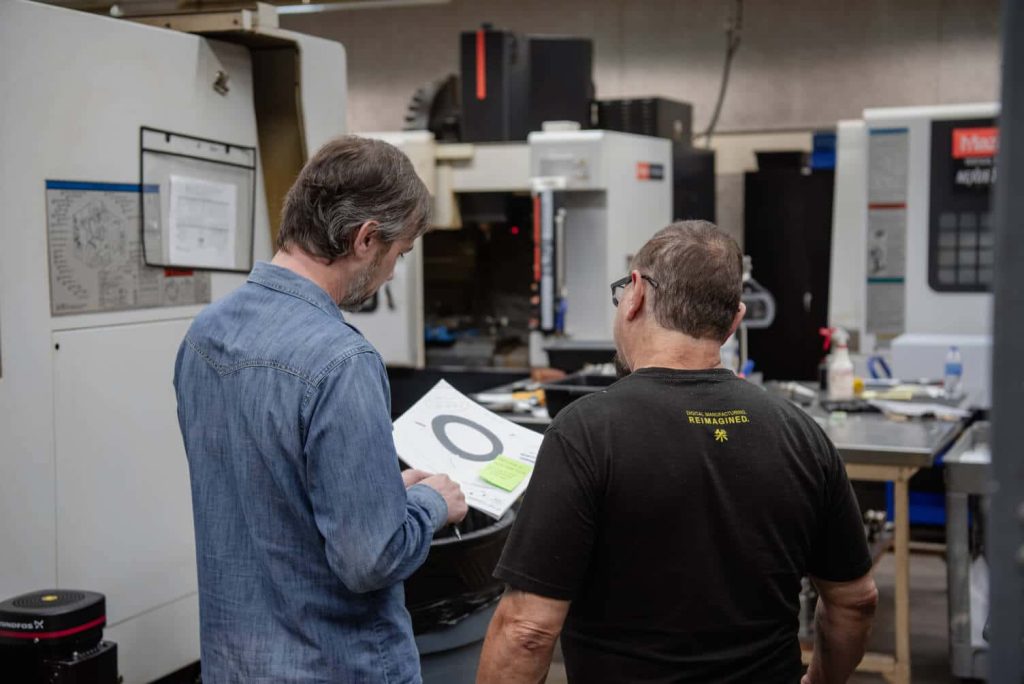
Fathom’s continuous improvement loop aims to make the next project better – and in some cases, make the current project better, too.
This approach goes far beyond a post-mortem analysis. What sets it apart?
- Information is recorded during the job when insights are fresh.
- In some instances, adjustments can be made immediately, providing instant and unexpected value.
- The process identifies areas where OEMs can improve, helping future projects run smoother.
This continuous improvement loop is one component of Fathom’s white glove service. The initiative is designed to reduce the frustrations OEMs can face when working with manufacturing partners – frustrations that slow work, introduce risk and make already demanding jobs harder than need be.
Real-Time Documentation is Key
There is still a role for post-mortems, but the initiative recognizes that when it comes to documentation, there is no time like the present.
Real-time data gathering drives the process. Observations are documented while the work is underway – instead of after the fact when recollections may be hazy.
Of course, team members in the midst of a project rarely have time to complete exhaustive reports. Fathom addresses this by making it quick and simple to provide input, a nod toward the realities of the workplace.
Team members submit brief inputs that are routed to “the quarterback.” The term refers both to proprietary software and a human point person who manages the information. This individual recognizes the value of the data and how it can lead to improvements, either immediately or in the future.
The point person also ensures that insights are shared across teams. Coordinated communication helps stakeholders understand how their actions impact others. This collaboration allows Fathom, OEMs, vendors and suppliers to see where gaps exist.
Another element of white glove service is communication with outside suppliers and vendors. Their input goes a long way in ensuring that a potential solution in one area won’t create problems further along the process.
How Customers Benefit
The continuous improvement loop can uncover meaningful efficiencies.
On the current project. In some cases, the OEM is presented with a process improvement that impacts the present assignment. The more complex the work the more likely opportunities can be found. Even a seemingly minor adjustment can cascade and deliver significant gains.
On the next endeavor with Fathom. Improvements are already built into the structure when an OEM returns with similar work. That means a stronger starting point and smoother flow from the outset.
On the next project without Fathom. White glove service means sharing the knowledge regardless of where the part is produced. Fathom passes data and insights to the OEM – including areas where improvements are needed, such as missing features on drawings or incomplete documentation. OEMs can refine designs and the manufacturing partner has a jump on identifying pitfalls.
With future clients. Lessons learned on one job can benefit others as well. Insights are applied across Fathom’s operations, allowing future customers to gain from past experiences.
A Different Take on Continuous Improvement
Continuous improvement isn’t an afterthought at Fathom. It’s an integral part of every project. By capturing input in real time and sharing it openly, the white glove model ensures each project contributes to making the next one even better.