Manufacturing programs rarely fail because engineers lack expertise or suppliers lack the equipment to perform the work. More often, breakdowns occur in the coordination between teams, facilities, processes and timelines long before production begins.
During project implementation, traditional supplier relationships often operate reactively. Customers request updates. Suppliers provide status reports. Issues are frequently addressed only after they become problems instead of being anticipated and mitigated early. While this reactive model may be manageable for simple projects, it becomes increasingly fragile as program complexity grows.
For many OEMs, managing this complexity becomes the most time‑consuming part of the job. Engineers must chase updates instead of refining designs. Procurement professionals juggle multiple supplier conversations while trying to maintain accurate timelines for internal stakeholders. Program leaders struggle to explain shifting production schedules because work is happening across multiple facilities and suppliers.
The Solution to Runaway Complexity
Fathom recognizes this growing friction and has developed a new organizational structure to address it. The company’s Corporate Program Management Office (CPMO) is designed to coordinate complex manufacturing programs so customers can focus on what they do best—bringing products to market efficiently.
As a core element of Fathom’s White Glove manufacturing approach, the CPMO provides customers with a single point of accountability for coordinating the company’s manufacturing capabilities, engineering resources and external supply partners.
This proactive model enables Fathom to identify potential challenges early and collaborate with customers on solutions. Scheduling conflicts, material availability issues and process bottlenecks become visible before they escalate into delays. Engineers gain visibility into issues before they affect downstream milestones, while procurement teams receive the clarity they need to manage expectations internally.
How the CPMO Works
Fathom operates seven U.S. manufacturing facilities, each with specialized capabilities ranging from additive manufacturing to precision machining and finishing. While this distributed structure allows the company to offer a wide range of services, it can also introduce complexity when a single program requires multiple technologies.
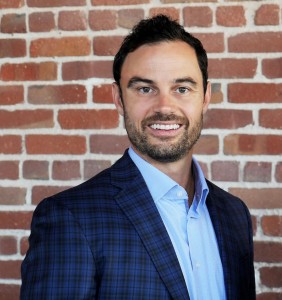
Mark Huffman, Senior Technical Program Manager at Fathom, describes the CPMO as the operational bridge between the company’s commercial, engineering and production teams. “Our role is to translate customer requirements into an executable manufacturing program and ensure every team involved stays aligned from quote through delivery,” he explains. “We focus primarily on complex programs that may involve multiple technologies, multiple sites or specialized outside vendors.”
A customer’s experience with the Fathom CPMO often begins during the quoting process. “We start communicating early to clarify requirements and identify potential risks,” Huffman says. “That early engagement helps us catch issues before production begins, which significantly de‑risks the program.”
By assigning a centralized program manager and supporting team through the CPMO, Fathom consolidates multiple moving parts into a coordinated effort. Customers no longer need to monitor each supplier individually or reconcile multiple status reports. For complex programs, the CPMO oversees execution from early engagement through delivery to ensure engineering, production and supply chain partners remain aligned.
That coordination becomes particularly valuable when programs span several manufacturing processes. A single project may involve additive manufacturing for an initial build, secondary machining for precision features and specialized coatings required by regulatory standards. Each step may require a different facility or supplier, creating potential scheduling conflicts and dependencies that must be actively managed.
Huffman notes that this orchestration becomes even more important when programs extend beyond Fathom’s internal capabilities. In industries such as aerospace and defense, certain processes may only be performed by a limited number of qualified vendors.
“Sometimes there’s only one supplier in the country capable of performing a specific process,” he explains. “In those cases, we integrate those vendors directly into the program plan and manage the coordination so the customer doesn’t have to.”
Risk management is also a core responsibility of the CPMO. Material lead times, process availability and capacity constraints are evaluated early so potential disruptions can be mitigated before they impact delivery schedules.
Fathom also tailors reporting and communication cadence around each customer’s preferred operating model. “We adapt our reporting structure to match how our customers manage their programs,” Huffman explains. “The goal is to provide clear visibility without adding unnecessary administrative overhead.”
A Single Point of Ownership
One of the most important aspects of the CPMO model is the introduction of clear program ownership. In many manufacturing relationships, responsibility becomes diffused as work moves between departments or suppliers. When issues arise, customers often struggle to determine who is responsible for resolving them.
The CPMO structure eliminates that uncertainty. Programs are assigned a dedicated program manager responsible for monitoring execution, coordinating resources, managing risk and maintaining communication with the customer throughout the program lifecycle.
This structure is flexible enough to adapt to mid‑project changes. Design revisions, material substitutions and scheduling adjustments are common as programs move from prototyping through production. With centralized program leadership managing the effort, those changes can be coordinated quickly without forcing customers to manage them themselves.
Supporting the Vision of White‑Glove Manufacturing
The CPMO plays a critical role in supporting Fathom’s broader White Glove manufacturing strategy. While the term is often used loosely in marketing across the industry, Fathom treats it as an operational philosophy focused on proactive program management and customer transparency.
Delivering that level of service consistently requires infrastructure capable of coordinating people, processes and information across the organization. The CPMO provides that framework by establishing standardized program management practices and clear communication channels across engineering, operations and supply chain teams.
Building a Scalable Model for Complex Manufacturing
As manufacturing programs continue to grow more complex, the need for structured coordination will only increase. Technologies are evolving rapidly, supply chains are becoming more distributed and customers expect faster timelines than ever before.
Fathom’s CPMO represents an effort to build an operating model capable of managing that complexity at scale. By formalizing program management practices and centralizing coordination, the company is creating a framework that supports increasingly sophisticated manufacturing programs.
The CPMO also supports a post‑order review process designed to capture lessons learned and identify opportunities to improve manufacturability, lead times and efficiency for future builds.
For Huffman, the objective is straightforward: remove unnecessary friction from the customer experience. “When we manage the coordination internally, it frees our customers to focus on solving engineering challenges rather than managing supplier execution,” he says.
As OEMs navigate demanding development cycles and competitive markets, that level of clarity and program ownership is becoming one of the most valuable services a manufacturing partner can provide.