Skip to content

Fathom is hiring for multiple positions across our nationwide sites! To see all open positions, click here

Die Casting by Fathom

Get Precision Parts at Production Speed
Request a Quote Now
Trusted by Industry Leaders
L3Harris
Magpul
Lucid Motors
Tesla
GE Healthcare
“Fathom has been a strong partner on our EV programs. They helped us optimize a few key components for weight and manufacturability, and they consistently hit the tolerances we need. Their fast turnaround times have kept our development cycles moving, which is critical in EV work.”
Senior Manufacturing Engineer
EV Systems Supplier
“We came to Fathom with a part that had been causing issues at another supplier, inconsistent fills, porosity, and too much variation between runs. Fathom’s die casting team dug into the tooling, adjusted the gating strategy, and stabilized the process faster than we expected. Since then, we’ve had zero line disruptions tied to this component.”
Staff Engineer
Major Automotive OEM
“We rely on extremely tight tolerances and consistent surface quality for our semiconductor components, and Fathom’s die casting team has delivered both every time. They help us with our designs, reducing lead time and improving dimensional stability without compromising performance. Their responsiveness and technical depth make them one of the most reliable casting partners we work with.”
Senior Mechanical Engineer
OEM in the Semiconductor Industry
“With their response time, quotes and communications, Fathom is highly regarded because they are always upfront. They say what they do and do what they say.”
John Doe
Consumer Technology Company
prev
next

How Does Die Casting Work?

01 Part & Tool Design

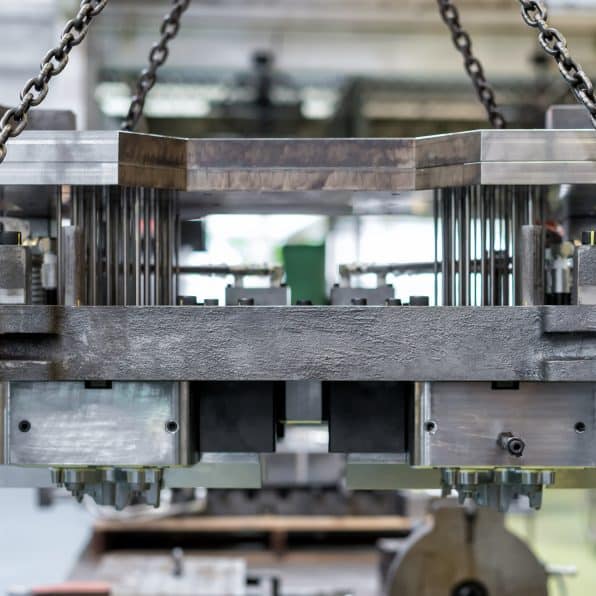
A mold is a cavity that contains the shape of the desired part and includes a gating system for pouring the molten material into it. When designing it, the following guidelines need to be followed to ensure a successful casting: Maintain uniform wall thickness, avoid sharp corners and thick sections, apply proper draft angles and select suitable materials based on your requirements. You may also need to allow for shrinkage of the die cast part.

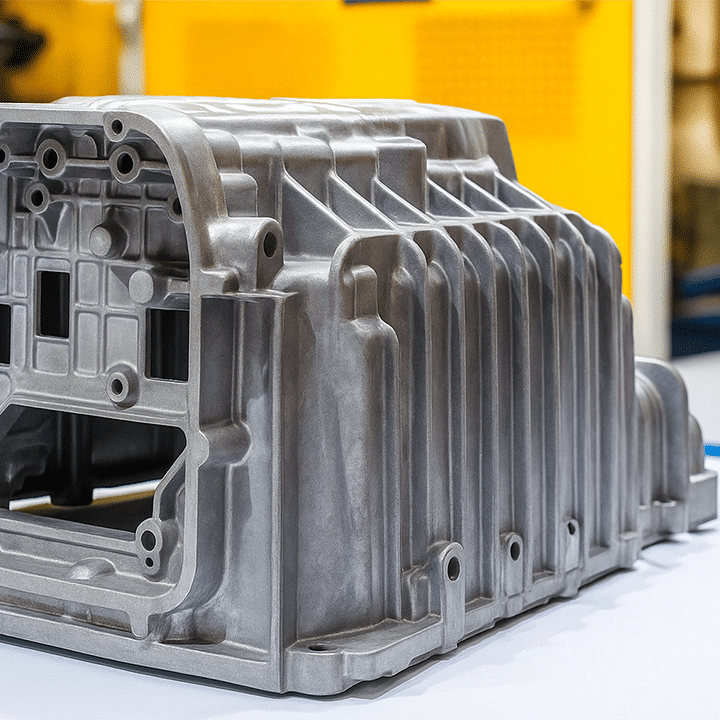
High precision die mold for casting automotive aluminium parts make with iron metal steel by lathe milling drilling and CNC machinery in the factory
02 Molding

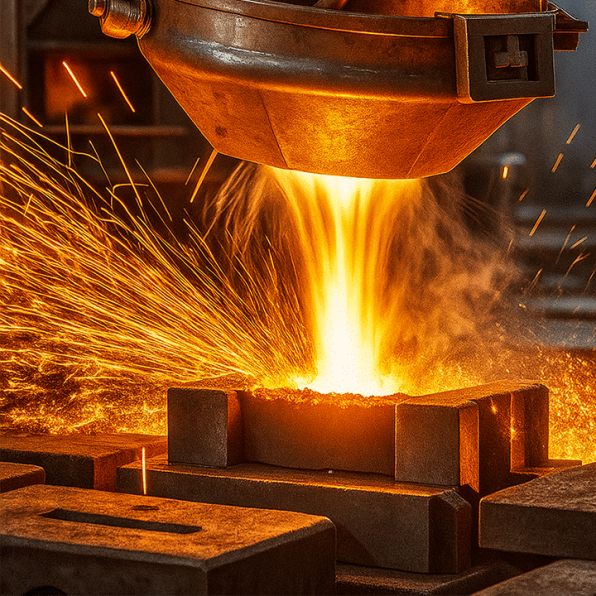
The metal for the part is heated in a furnace until it becomes molten. Molten metal is poured into the mold through the gating system. Depending upon the type of die casting, this may be done under pressure or vacuum conditions. The molten material cools and solidifies inside the mold, taking on the shape of the cavity. Once the material is fully hardened, the mold is broken or opened to remove the casting. This step is called “shakeout.”

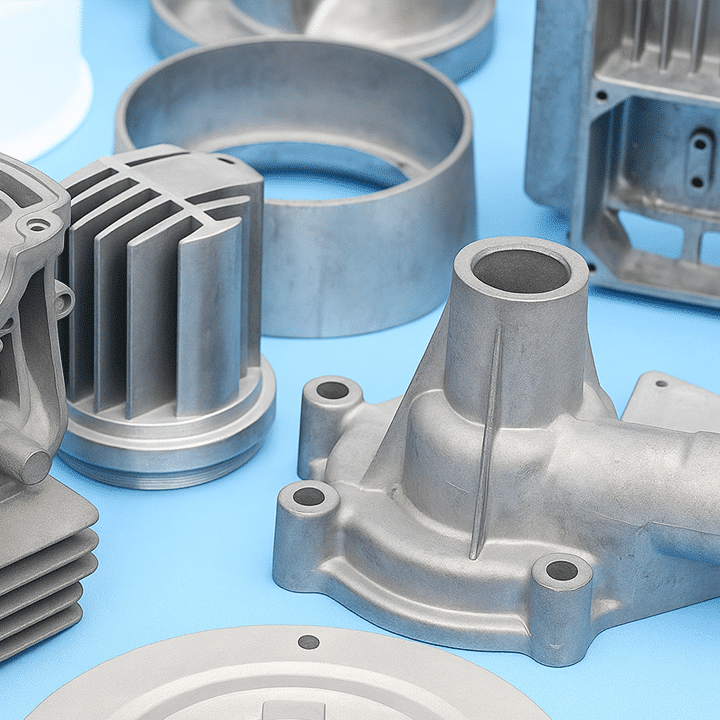
How it works_Die cast_process_2
03 Post-Processing

The raw casting is cleaned to remove any leftover mold material or gating system remnants. The part is then inspected for quality, such as checking for dimensional accuracy and surface integrity. Finally, the casting undergoes any necessary finishing, such as machining, to meet the specific design requirements. Deburring or abrasive blasting may be used to give the casting a smooth surface. Die cast parts may then be painted, coated or electroplated.

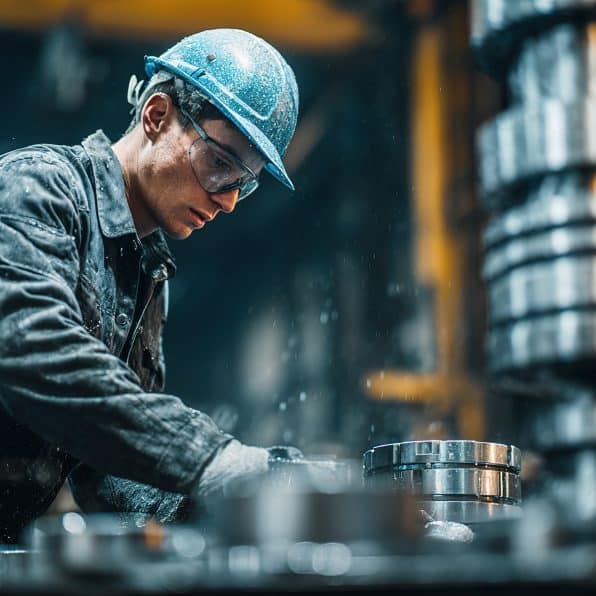
Dedicated Worker Engaged in Die Casting and Cleaning Metal Parts

Frequently Asked Questions About Die Casting

Learn more about this proven way to manufacture tough metal parts

Q.
What materials are used in die casting?

A.

Common materials include aluminum, zinc, and magnesium alloys. Hot chamber die casting is typically used for lower melting point metals like zinc, while cold chamber is used for higher melting point metals like aluminum.


Q.
What are some common defects that can happen in die cast parts?

A.

Porosity is caused by holes or voids in the finished part caused by gas entrapment or solidification shrinkage. Swells are bulges on the surface of the casting, caused by low-strength molds.

Q.
How can I optimize my die cast part designs?

A.

Involve engineers early in the process to apply Design for Manufacturing (DFM) principles. Determine which dimensions are non-critical to allow for more lenient tolerances, which can extend tool life and make the part easier to produce. Ensure proper wall thickness and draft angles to avoid defects and reduce costs.

Why Our Customers Trust Fathom

Human-First Engineering
Our expert engineers will help you optimize your part designs for production.
Decades of Expertise
Our engineering and production teams bring decades of expertise and problem-solving to every project.
Integrated Manufacturing & Finishing
We offer manufacturing and full post-processing capabilities under one roof for one point of accountability.
Full Product Life-Cycle Support
We’re your partner from design and prototyping to bridge and full production.

Fathom is Your Product Lifecycle Partner

From early concepts and prototypes to bridge and low-volume production, we’ve got you covered.

Early Concept

We’ll perform a Design for Manufacturability (DFM) analysis to help you optimize your part design for production. Our expert engineers will also identify opportunities for cost reduction in part design, tooling and the proposed production process. Our ultimate goal? To eliminate potential production problems early in your design process.

Rapid Prototyping

Quickly iterate and finalize part designs using our on-demand manufacturing services. Rapid prototyping services employ digital manufacturing methods. They enable designs to move directly from a CAD drawing to a finished plastic or metal part in a matter of hours or days – without the need for tooling. Rapid prototyping can help you bring products to market faster.

Bridge Production

Bridge production can help you solve a number of common problems, including side-stepping tooling delays, meeting regulatory requirements and conducting market research if you’re unsure of demand for your new product. Producing a small quantity of parts enables you to preview a new product to a select audience and make tweaks before you ramp up to full production.

Small-Medium Volume Production

Many third-party manufacturers prefer to avoid low-volume production in favor of long production runs of relatively simple geometries. We specialize in low-volume/high-mix projects. We’re very good at it! Bridge production also makes sense when you’re moving tooling from overseas to domestic production, so you can keep your production line running smoothly.

1 of 1

Start Your Project with a Trusted Manufacturing Partner

Let’s Get Started on Your Project

Every quote is reviewed by an experienced engineer to ensure optimal design, materials and manufacturability, so your part gets made right, the first time.

Let's Go
Robot_Hand_CTA