Skip to content

Fathom is hiring for multiple positions across our nationwide sites! To see all open positions, click here

Extrusion

Long metal and plastic parts with intricate cross-sections
Get a Quote
Trusted by Industry Leaders
L3Harris
TSI
Lucid Motors
Tesla
Leonardo DRS
“Working with Fathom has given us a level of supply chain control we haven’t had with other partners. Instead of juggling multiple suppliers for machining, sheet metal, extrusions, and 3D-printed prototypes, we can run everything through one team and that’s been a huge advantage for our EV programs. Their engineers helped us tighten up a machined cooling-plate design, turn around sheet metal brackets in days, and rapidly iterate several 3D-printed enclosure concepts early in development. Having all of these capabilities under one roof has reduced delays, improved consistency across assemblies, and cut a significant amount of coordination time on our side.”
Senior Manufacturing Engineer
Major EV OEM
“Fathom has been a strong partner on our EV programs. They helped us optimize a few key components for weight and manufacturability, and they consistently hit the tolerances we need. Their fast turnaround times have kept our development cycles moving, which is critical in EV work.”
Senior Manufacturing Engineer
EV Systems Supplier
Fathom understands aerospace requirements, from material traceability to process control, and their engineering support helped us refine our profile for better strength-to-weight performance. Fathom’s expertise has been a real asset to our program.”
Mechanical Engineer
Tier 1 Defense Contractor
“Working with Fathom has made our extrusion work a lot smoother, their AS9100 and ITAR certifications gave us confidence from day one. Their team helped us fine-tune an aluminum profile that needed to be lightweight but still meet our strength requirements, and they hit the tolerances consistently across every run. It’s been a huge help having a supplier that actually understands the demands of defense programs and can move quickly when we need it.”
Program Engineer
Defense Systems Contractor
“With their response time, quotes and communications, Fathom is highly regarded because they are always upfront. They say what they do and do what they say.”
John Doe
Consumer Technology Company
prev
next

How does Extrusion work?

01 Part & Die Design

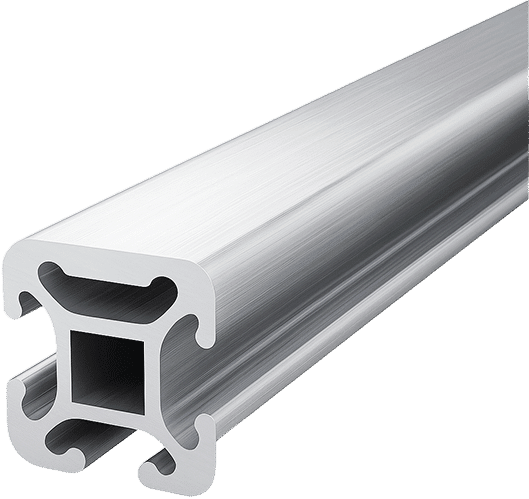
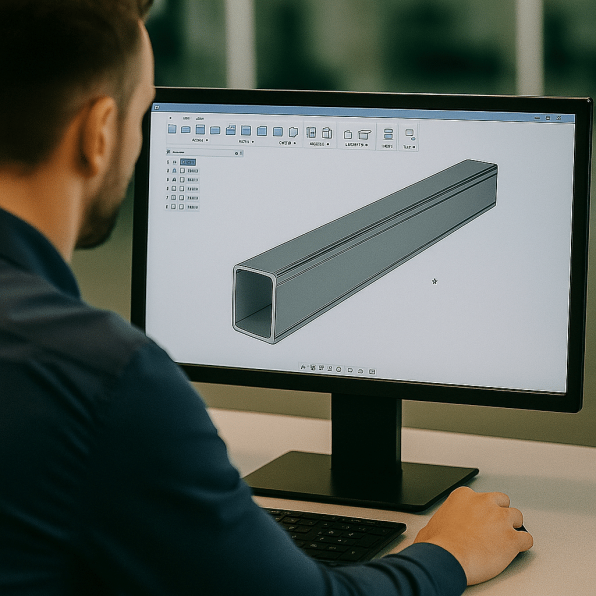
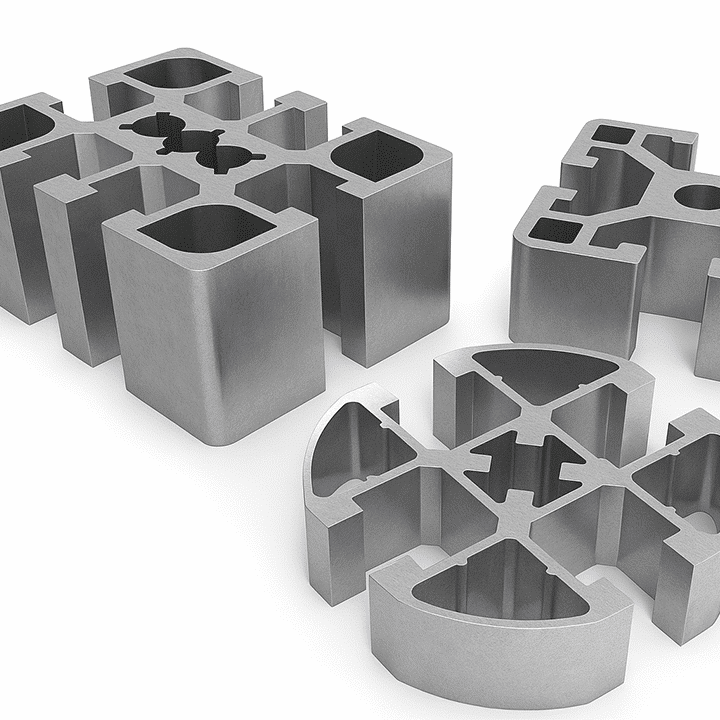
The process begins with the conceptualization and detailed design of the desired final product and the corresponding die. For example, its cross-section is uniform along its length, which is essential for the extrusion method. This step involves considering the material properties, intended use, and required final dimensions. A specialized die, which is a metal template with an opening in the shape of the desired profile, is designed and manufactured.

extrusion-design-chatgpt
02 Extruding the Parts

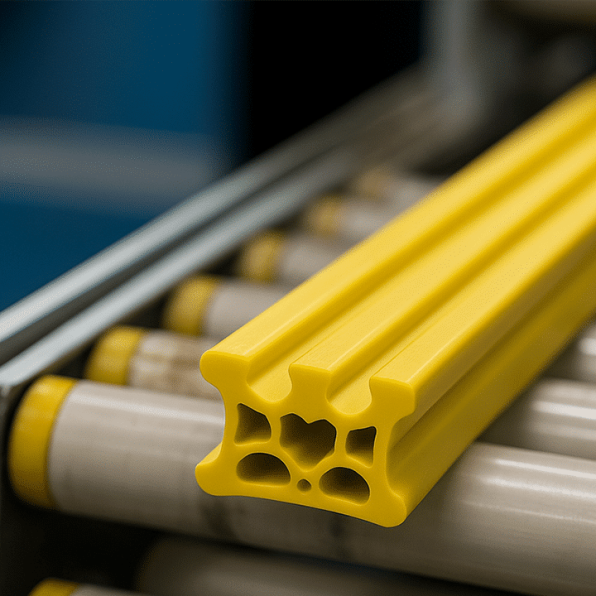
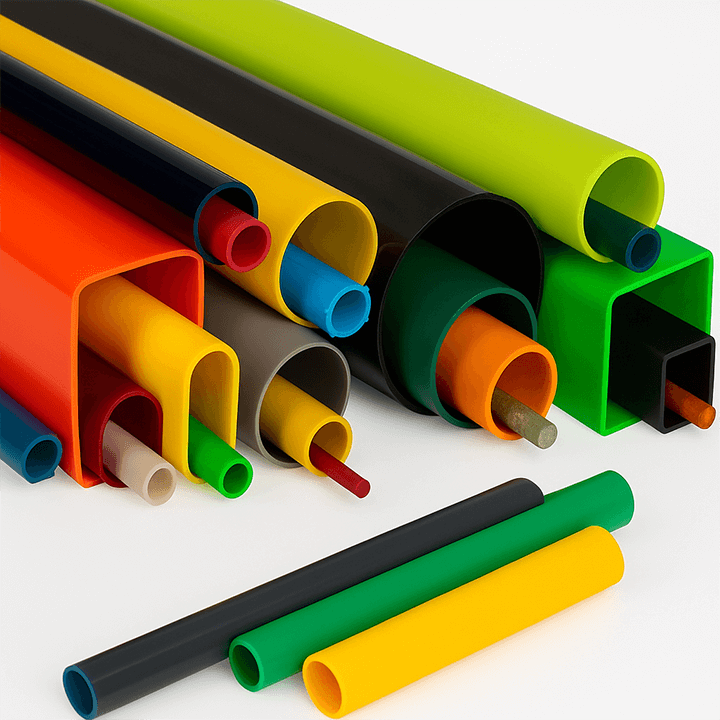
The material to be extruded is loaded into the extruding press while being heated and compressed. The molten plastic or softened metal is forced through the opening in the die. The material takes on the inverse shape of the die opening as it emerges. As the newly formed profile exits the die, it must be cooled quickly to solidify and maintain its shape. It is pulled along a runout table by a puller to ensure its straight and to relieve internal tension in the material.

How it works_plastic extrusion_process
03 Post-Processing

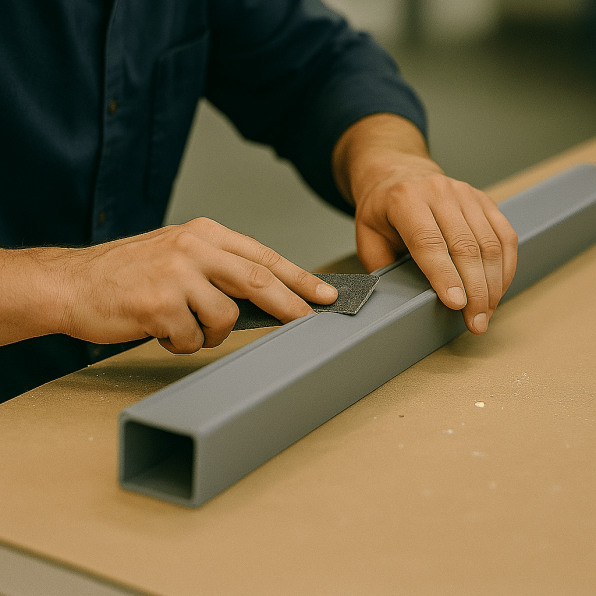
Common post-processing steps for extruded parts include cutting them to the required length, punching or drilling holes in it, mitering to to be joined with other extrusions and performing any needed machining to add features like grooves or slots. Extrusions may be painted, coated, anodized or powder coated for aesthetics or protection. Extruded parts may also be assembled with other components to create a final product.

sanding-an-extrusion-chatgpt

Frequently Asked Questions About Extrusion

Learn more about this highly specialized manufacturing technique.

Q.
What materials can be used?

A.

Common materials include PVC, ABS, and various polyethylenes for plastics, and aluminum for metals. For plastic, the best material depends on the desired properties like temperature resistance, chemical exposure and strength, which can be enhanced with additives like fiberglass or flame retardants.


Q.
What are the design limitations of extrusion?

A.

Designs with sharp corners can be problematic for both metal and plastic extrusions. Adding radii and fillets is recommended to prevent material buildup, improve flow and reduce stress on the die. For plastic, avoid hollows within hollows and design for balanced wall thickness to ensure uniform cooling and dimensional stability.

Q.
How does the process handle custom colors and finishes?

A.

Plastic offers more customization options, because colorants can be added to the base material to achieve custom colors and a wide variety of textures and finishes. Metal parts are typically limited to coatings or plating after extrusion.

Q.
What is the lead time for extrusions?

A.

The time for a new die is separate from the production run time. Production lead times depend on the complexity of the order and production volume.

Fathom is Your Product Lifecycle Partner

From early concepts and prototypes to bridge and low-volume production, we’ve got you covered.

Early Concept

We’ll perform a Design for Manufacturability (DFM) analysis to help you optimize your part design for production. Our expert engineers will also identify opportunities for cost reduction in part design, tooling and the proposed production process. Our ultimate goal? To eliminate potential production problems early in your design process.

Rapid Prototyping

Quickly iterate and finalize part designs using our on-demand manufacturing services. Rapid prototyping services employ digital manufacturing methods. They enable designs to move directly from a CAD drawing to a finished plastic or metal part in a matter of hours or days – without the need for tooling. Rapid prototyping can help you bring products to market faster.

Bridge Production

Bridge production can help you solve a number of common problems, including side-stepping tooling delays, meeting regulatory requirements and conducting market research if you’re unsure of demand for your new product. Producing a small quantity of parts enables you to preview a new product to a select audience and make tweaks before you ramp up to full production.

Small-Medium Volume Production

Many third-party manufacturers prefer to avoid low-volume production in favor of long production runs of relatively simple geometries. We specialize in low-volume/high-mix projects. We’re very good at it! Bridge production also makes sense when you’re moving tooling from overseas to domestic production, so you can keep your production line running smoothly.


1 of 1

Why Our Customers Trust Fathom

Human-First Engineering
Our expert engineers will help you optimize your part designs for production.
Decades of Expertise
Our engineering and production teams bring decades of expertise and problem-solving to every project.
Integrated Manufacturing & Finishing
We offer manufacturing and full post-processing capabilities under one roof for one point of accountability.
Full Product Life-Cycle Support
We’re your partner from design and prototyping to bridge and full production.

Kick Off Your Project Today

Expect More From Contract Manufacturing

It’s time to level up your expectations. Contract manufacturing should be much more than an automated quote and superficial DFM feedback. Experience the Fathom white-glove difference – an engineering and expertise-driven process that will guide you from concept to production with clarity, confidence, and zero guesswork.

Request a Quote
Drone_CTA