Field Note:
Inconsistent Wall Thickness Can Cause Defects
Problem
Inconsistent wall thicknesses often drive uneven cooling, which can cause a variety of defects in injection molded parts:
-
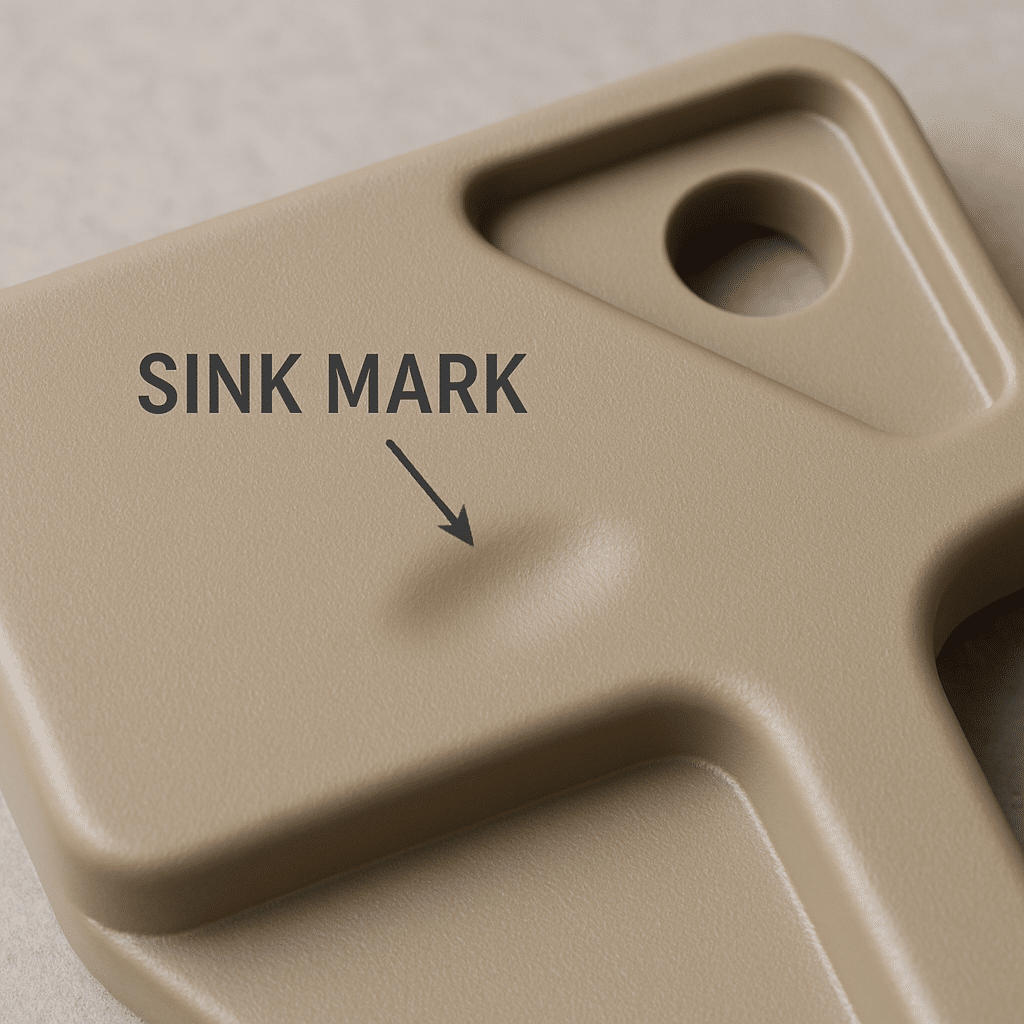
Thicker sections cool slower, leading to sink marks, voids and warping
-
Sink marks are especially common near ribs, bosses and reinforced corners
-
Voids may be caused by the center of the part cooling too slowly. This can affect the part’s structural integrity.
-
Thick walls use more material and require longer cycle times. Both factors result in higher per-part costs.
-
Thinner wall sections cool faster, resulting in short shots where parts are only partially formed.
-
Thin areas can also act as weak points in the parts, reducing their structural integrity
Solution
Try these tips to solve the underlying problems that tend to cause sink marks:
-
Maintain consistent, nominal wall thickness throughout the part
-
If the wall thickness must change, use gradual, tapered transitions instead of abrupt steps
-
Consider replacing thick wall sections with reinforcing ribs, which use much less material and will cool faster
-
Place gates near thicker sections to ensure proper packing and reduce sink marks
-
Material flow characteristics have a direct impact on achievable wall thickness. Select materials that are consistent with your desired wall thickness