Transcript - Newcut by Fathom Facility Tour
Welcome to NewCut by Fathom located in Newark, New York. My name is Pete Engel. I’m the general manager here. We specialize in photochemical machining. Come on in and we’ll take a look around.
All right, this is an example of a photochemical etched part. It is a process that people are not very familiar with. We sometimes call it the best kept secret in manufacturing. It is a process that uses photography and chemistry to cut parts like this from thin sheet metal.
The first step in the process is to cut metal from the sheet or coil to working size. Once it’s in the working size, such as this panel right here, we wanna clean it. We wanna get all the dirt, grease, oil, fingerprints off it. We do it in this machine here, which is a clean line. It works just like the car wash. There are spray nozzles above the conveyor, there are spray nozzles below the conveyor, and as the sheet rolls through it will spray the cleaner on there, followed by a rinse station, followed by drying at the very end, and it will pass through the wall into the next step of the process.
We’re in the yellow room. We have yellow safe lights in here because the film we use in this room is sensitive to white light. We’re going to use that film to coat the panel and protect all surfaces of it prior to etching. So here’s the panel, comes through from the clean line, and it will go into the laminator.
The laminator has a roll of photoresist on the top, has a roll of photoresist on the bottom. The laminator will coat both surfaces completely top and bottom to protect it from the etching.
While the panels are being prepped, we create our photo tool in this room. We take CAD data and array it and plot it onto a film such as this here. We create two films, one for the top of the panel, one for the bottom. These two films will align with precision to create an image on the top and the bottom of the panel so that when we etch, we can create these shims by etching from both sides.
After the photo tool is created, we bring it in here to meet up with the coated panel. We’re going to transfer this image onto that panel, and we’re going to use a machine such as this one.
We’re now in the main etching room. The next step in the process is to put the panels through the developer.
This will develop the image that we exposed in the previous step. This machine works just like the other ones, spray nozzles above, spray nozzles below, just a different chemistry in there, and the panels will pass through, get developed, rinsed, and dried.
This is a typical etching machine which we use to etch the parts. They’ve come through the developing step, they are selectively masked, and this machine will spray ferric chloride onto the surface. The ferric chloride will react with the metal, it will dissolve the exposed metal without leaving a burr, without any heat affected zones or mechanical stress added to the parts. After the parts are etched, the final step is to strip off the remaining photoresist. We strip off the resist, clean them up, and send them into final inspection and packaging.
This is a quality lab. This is where all the parts end up when they’re done. The team here will look at all the parts to make sure they meet all the customer specifications and requirements. Then they get packaged up and sent on their way to the customer.
This part’s an example of a small filter screen. It’s got a lot of little holes in it very close together. This is the perfect application because we’re putting all those holes in at the same time. They’re very close together. You’re not going to get any distortion from heat from cutting them any other way.
Here’s another example of some very fine wires that are left. The process cuts this out as thin stainless, no distortion, no burrs, no broken wires, and very thin features that you can’t make any other way.
This part is prototyped for a stamper. Eventually this will go to a stamping for full production run, but because of the quantities that are currently called for right now, we are etching them and then the stamper manually finishes up with some forming and plating and sends them off to their customer.
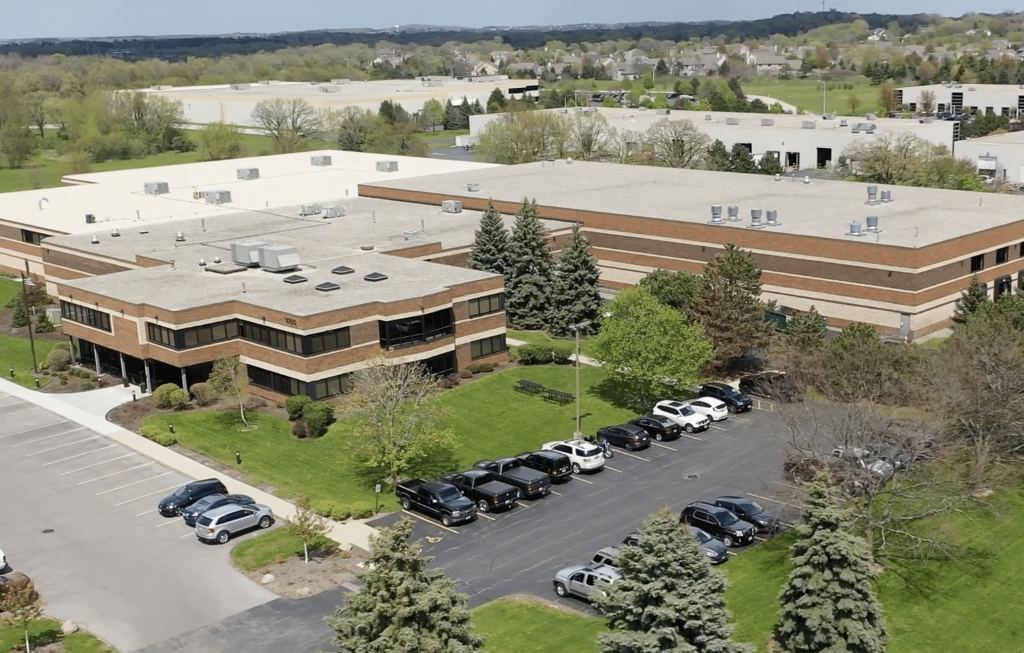
Newcut was founded in nineteen seventy, so in the past fifty six years we have been supplying parts to a lot of different customers and a lot of different industries. In twenty eighteen we built this brand new seventeen thousand five hundred square foot facility brought in new equipment to step with the latest trends in the industry and to provide tighter tolerance better quality parts for our customers.
We are currently AS nine thousand one hundred certified. Our customers recognize that. They know they’re going to get good quality parts from us. Over the years we’ve seen a large variety of projects from parts that go into satellites down to the parts that make your orange juice in the morning. Our core group of people who have been here from ten to twenty years have seen the whole range.
The process is a combination of technology and craftsmanship. It’s the people that put it all together and make good parts come out in the end. And our years of experience have allowed us to take on challenging projects and new and exciting projects as well.