ECO churn is threatening to delay critical manufacturing programs at a time when defense contractors can least afford it. Here’s a closer look at the factors that are driving this trend, and how contractors and suppliers can work together to minimize these engineering challenges.
Defense manufacturers are being pushed to increase production while many of the systems they are building are still changing. New weapons platforms, satellites, unmanned systems, sensors, communications equipment and electronic warfare technologies are moving toward production under pressure to reach the field faster. That urgency leaves less distance between development, qualification and manufacturing than most production teams would prefer.
Low-rate initial production (LRIP) frequently overlaps with engineering development, particularly on newer defense programs. Production teams are learning what the design looks like outside the controlled environment of a digital model or prototype lab. Features that appear reasonable in CAD may be difficult to machine consistently, tolerances may be challenging to inspect and materials selected during development may no longer be available from qualified sources.
Those and other discoveries often result in an engineering change order (ECO). The revision may add a dimension, replace a material, update a testing requirement or alter a process. On the drawing, the change may occupy one line. Across a defense manufacturing program, it can interrupt purchasing, machining, outside processing, quality, documentation and delivery.
The gap between the size of the revision and the size of the disruption is where defense schedules begin to unravel. An ECO rarely affects only the engineer making the change. Once work has entered production, the revision impacts every person, system and supplier responsible for building, processing, inspecting and documenting the part.
Why Defense Designs Keep Changing
Engineering changes occur in nearly every manufacturing industry, but defense designs contain several conditions that make them more frequent and more complex. New platforms are often being produced while engineers continue to learn from testing, early deployments and manufacturing feedback. The production environment becomes part of the development process rather than the final step after the design has been proven and frozen.
“Design engineers are not always manufacturing engineers,” explains Mark Huffman, senior program manager within Fathom’s Program Management Office. “A feature may be designed a certain way, and then the team begins seeing issues with manufacturability once it reaches production.”
The pattern is especially visible in emerging technologies. Huffman has seen newer drone, satellite, sensor and communications programs undergo numerous revisions, while older platforms may go for long stretches with few meaningful changes. A mature military system may go extended periods with relatively few significant engineering changes, while an emerging platform can experience multiple revisions over the same period as the design matures through testing and production.
Some programs continue changing throughout multiyear production. Fathom has worked with parts that reached dozens of drawing revisions after entering the manufacturing process. Large orders may be partially delivered before the customer decides to modify the remaining quantity, creating a cut-in point where different configurations must be managed simultaneously.
Legacy programs encounter a separate kind of instability. Their designs may be well-established, but the materials, electronics and suppliers that support them can disappear over time. A program may remain active for 20 years while a component, alloy or processing source has a much shorter commercial life. When a qualified source stops producing the required materials, an engineering change becomes necessary even though the product itself has not fundamentally changed.
How ECOs Ripple Through the Plant
An ECO rarely stays contained within engineering. Once a revision enters an active defense program, its effects begin to propagate through scheduling, purchasing, production, quality and any outside suppliers involved in the build. Each team must interpret the change through a different operational lens, and each response depends on where the work currently sits.
Production may need to stop immediately if the affected parts are about to enter an irreversible process, such as coating, heat treatment or final machining. A revised inspection requirement may not stop machines, but it can force quality teams to update measurement plans before completed parts can move forward. Even a change in quantity can disrupt the schedule by extending machine time, inspection workload and delivery sequencing beyond what the supplier originally planned.
Procurement often feels the longest ripple. Engineering may determine within a day that the revised part can be manufactured, but a new material requirement can add weeks or months. Certified defense materials come from a limited number of approved sources, and a manufacturer needing one bar for a small rework order may wait behind customers placing far larger purchases.
“If you need one bar to rework two pieces, the supplier may tell you it will be six weeks because it has to fulfill a larger order first,” Huffman notes.
Material changes also lead to a considerable increase in cost. A replacement source may be the only approved supplier in the country, and its pricing may be significantly higher than the material included in the original quote. The contract manufacturer must revise its purchasing, accounting and production plans while the customer continues to expect the original delivery date.
Tariffs have added pressure to that equation. Huffman specifically points to high-nickel alloys, aluminum, and titanium, where raw material costs can rise even when the certified product is ultimately purchased from a U.S. supplier. Domestic certification does not necessarily mean every upstream input escaped the tariff environment.
The recovery effort may add overtime, premium freight, expedited charges and rushed outside processing. A relatively modest revision can become expensive because the manufacturer is paying to restore a schedule that assumed the original material, supplier and production sequence would remain intact.
Traceability Determines Deliverability
Defense manufacturing requires more than producing a part that works. The manufacturer must show that the correct drawing, material, process, inspection method and revision were followed at every stage. A physically acceptable component can still become undeliverable when the documentation does not support the required configuration.
Fathom recently encountered that situation with an outside vendor. The supplier had already started work when a revised requirement arrived. Fathom forwarded the ECO, but the vendor completed the processes in accordance with the revision listed in its accepted purchase order.
When the parts were returned, the certificate of conformance no longer matched the customer’s latest requirement. The work had been performed, yet the documentation could not confirm that the new revision had been incorporated. Fathom then had to determine whether the customer would approve a deviation, whether the parts could be reworked or whether the order would need to be reproduced.
“We have seen situations where an ECO was communicated after outside processing had already begun. Even when the change was transmitted, the supplier’s accepted purchase order and active work instructions could still reflect the prior revision. That illustrates why communication alone isn’t enough—you need confirmation that the change has been received, reviewed and incorporated before production continues.”
An unusually complicated engineering problem did not cause the incident. A break in the rigorously required closed loop flowdown process caused it.
Highly regulated manufacturing depends on that chain remaining intact. Quality teams must know which revision to inspect. Shipping teams must confirm that the data package reflects the work completed. The customer may review the documentation before authorizing shipment and again when the order reaches the receiving dock.
A missing approval or outdated certificate can stop the order at any point. Traceability protects the integrity of defense programs, but it also means a change cannot be treated as complete until every associated record has caught up with the physical part.
One ECO Reaches Every Department
A customer may issue a single engineering change, yet the contract manufacturer may experience several separate changes internally. Huffman estimates that a typical ECO affects at least five areas: engineering, scheduling, production, quality and shipping or accounting. Procurement and outside suppliers can increase the number to 10 or 12.
Engineering interprets the revision and determines whether the part remains manufacturable. Scheduling identifies active work and evaluates the effect on other jobs already waiting for the same equipment. Production updates programs, tooling or work instructions, while quality revises the inspection plan and ensures the new requirement remains traceable.
Procurement may need to cancel an existing material order, source a substitute or qualify a different supplier. Accounting becomes involved when the customer’s purchase order must be revised to cover the additional cost. Outside processors may need updated specifications, new approvals or three-way nondisclosure agreements involving the customer, Fathom and the supplier.
Each step creates an opportunity for delay. The difficulty increases when different companies operate on separate systems and use separate purchase orders. A prime contractor may have released the newest revision, while the contract manufacturer is reviewing the previous one and an outside supplier is still working from an even earlier version.
Consolidating more manufacturing work within a single organization does not eliminate the required reviews. Engineering, quality, purchasing and production must still incorporate the change. The advantage comes from having those functions work from the same system and receive the same information at nearly the same time.
“The math is still there,” Huffman explains. “All of those teams still have work to do. It’s easier to control when the communication is internal because everyone can see the same change in real time.”
Vertical integration therefore changes the communication risk more than the technical burden. Fewer handoffs reduce the chance that a supplier continues working from outdated instructions. Program managers gain better visibility into work in process and can identify where the revision must be applied before another irreversible operation takes place.
Earlier Collaboration Limits ECO Damage
Not every engineering change can be prevented. Defense requirements evolve, qualification tests reveal problems and suppliers discontinue materials. New systems will continue to generate revisions as manufacturers and engineers learn how the designs perform in production.
A portion of ECO churn can be reduced before the order is released. Contract manufacturers often identify drawings that describe how a part should function but provide insufficient information to manufacture or inspect it consistently. A component may be machinable, for example, while a required relationship between two surfaces cannot be determined from the provided dimensions.
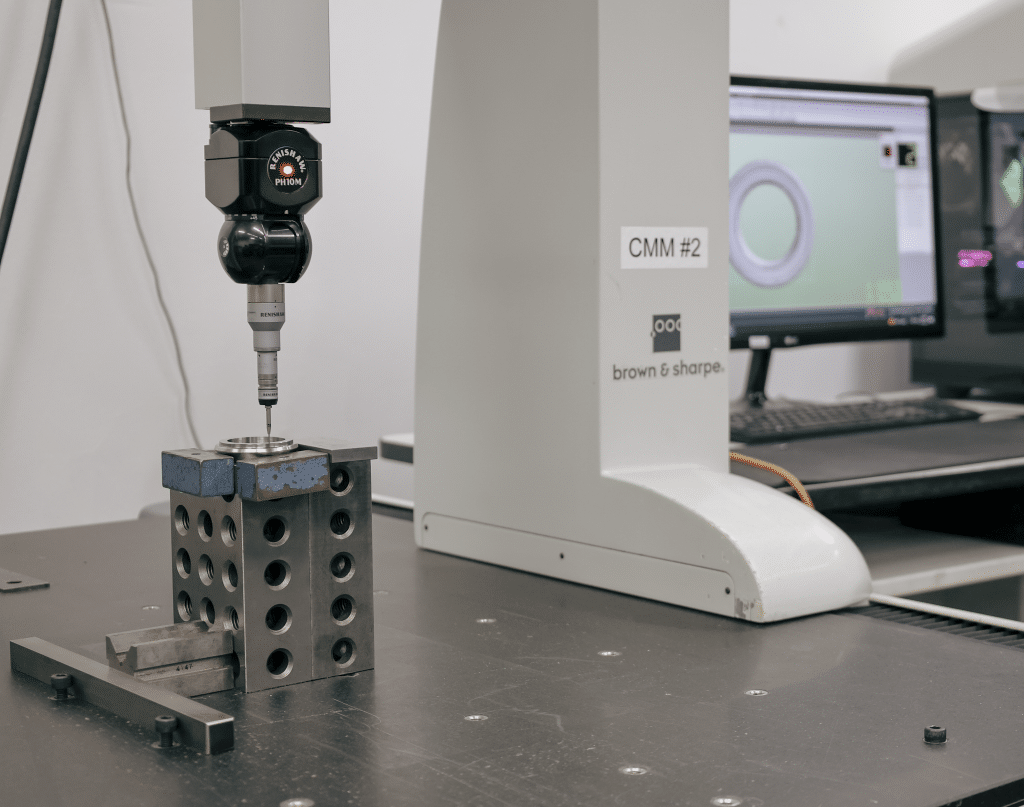
Fathom’s engineering and quality teams look for those gaps during the RFQ and design review process. When they find a missing tolerance, unclear datum structure or inaccessible inspection feature, they can return the questions before materials have been ordered. The drawing may still need revision, but the corrections are made before it becomes a mid-production ECO.
Better design for manufacturability should therefore include more than machining feasibility. It must consider inspection strategy, material availability, outside processing, approved supplier capacity and long-term sourcing. A design that can be produced once is not necessarily ready for a multi-layer defense program.
Producing qualified alternatives offers another form of protection. Some drawings permit more than one approved material, coating or testing method. Those options give the manufacturer room to respond when a supplier leaves the market or a particular alloy becomes unavailable.
“The more options we are given up front, the more room we have to maneuver,” Huffman emphasizes. “Anything that is single-source creates a risk. If an ECO affects that one source, there is nowhere else to go.”
Fathom managed one such situation when a defense prime needed to replace a material affected by a shortage. The customer identified an alternative through internal testing, but the revised materials still required burst testing to prove that the completed part met the original performance requirements.
Fathom sourced the substitute material, engaged an approved testing facility and coordinated the validation work quickly enough to maintain the delivery dates. The change still required procurement, testing, engineering review and documentation. A coordinated response prevented those activities from turning into separate delays.
Preparing for More ECO Churn
Defense production is entering a period when demand, platform development and supplier requirements are all moving at once. New cybersecurity expectations from the pending CMMC Level 2.0 requirements may reduce the number of small shops able or willing to participate in controlled defense work. Material shortages, tariffs and supplier consolidation are narrowing sourcing options at the same time the production requirements are increasing.
Huffman expects ECO volume to remain a significant part of defense manufacturing, particularly for newer programs. The larger question is how primes and their manufacturing partners will respond when the required schedule does not leave enough time for every traditional approval sequence to unfold.
Future programs may need clearer rules for qualified equivalents, materials alternatives and controlled deviations. Accepting a deviation does not mean abandoning traceability or performance standards. It means defining in advance what constitutes sufficient evidence when a previous configuration or substitute process still meets the required function.
Communication also needs more redundancy. A critical revision should not depend on one supplier contact checking an email before leaving for vacation. Manufacturers need escalation paths, secondary contacts and systems that show whether a change has been received, reviewed and incorporated.
Earlier visibility into the maturity of a defense program would also help. A contract manufacturer that knows a part is entering its first production iteration can plan differently than it would for a repeat order on a stable design. The team can anticipate revisions, protect flexible capacity and raise questions about sourcing or inspection before the schedule becomes fixed.
Engineering change will remain part of advanced defense manufacturing because the systems themselves must continue adapting. The threat environment changes, technology improves and supply chains rarely remain stable for the life of a program. The goal cannot be to remove every revision from production.
The more practical objective is to keep a change from becoming a surprise. Manufacturers that bring engineering, quality, procurement and program management into the conversation early are better positioned to understand the real cost of a revision. They can identify which activities must stop, which materials are at risk and which alternative paths remain available.
An ECO may begin with one altered dimension or one replaced specification. But its schedule impact is determined by how far the work has progressed, how many organizations must respond and how quickly they can begin working from the same information.
Defense manufacturers do not need partners who assume the design will remain untouched. They need manufacturing organizations prepared to manage controlled change without allowing one revision to destabilize the entire production program.