UGV Survives Tough Environments
-

Client
A venture-backed U.S. defense startup developing autonomous ground vehicles for casualty evacuation and forward resupply missions
-

Industry
Aerospace & Defense
-

Capabilities
Design for Manufacturability (DFM), Field Failure Analysis, Engineering Change Order (ECO) Management, CNC Machining, Sheet Metal Fabrication, Photochemical Machining, Additive Prototyping, Finishing, CMM and First Article Inspection

Traced nine field failures to their root causes in enclosure design

Passed MIL-STD-810H and IP67 qualification on the first attempt

Absorbed 14 field-driven ECOs without stopping builds
Fathom Engineers Field Failures Out of a Casualty-Evacuation & Resupply UGV
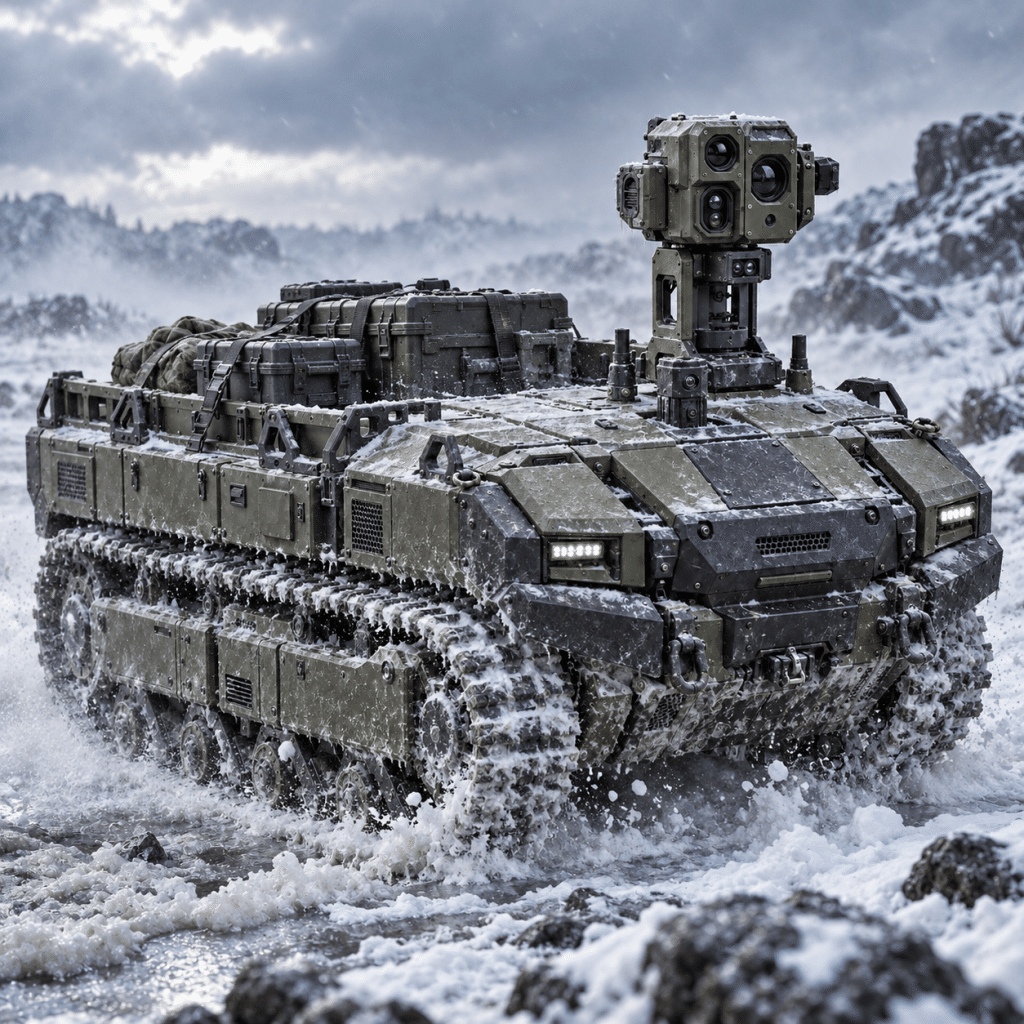
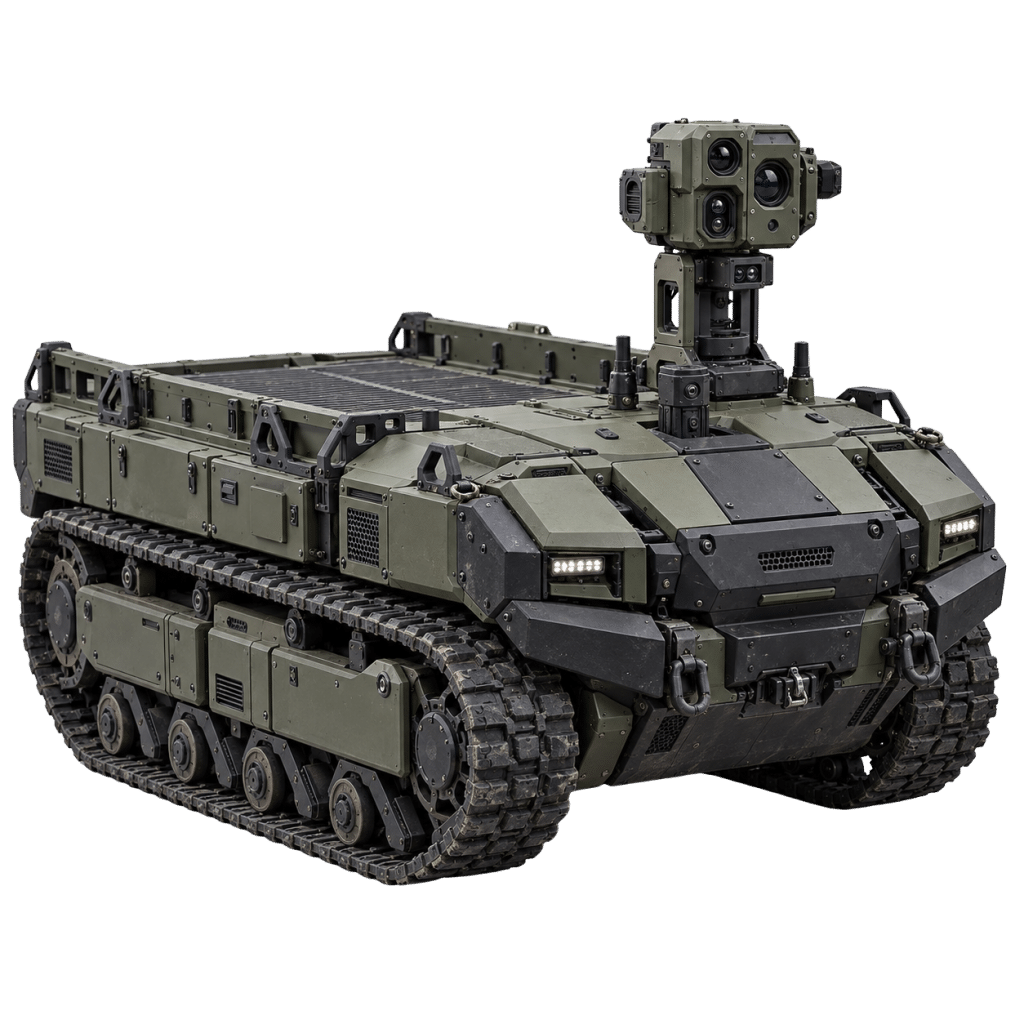
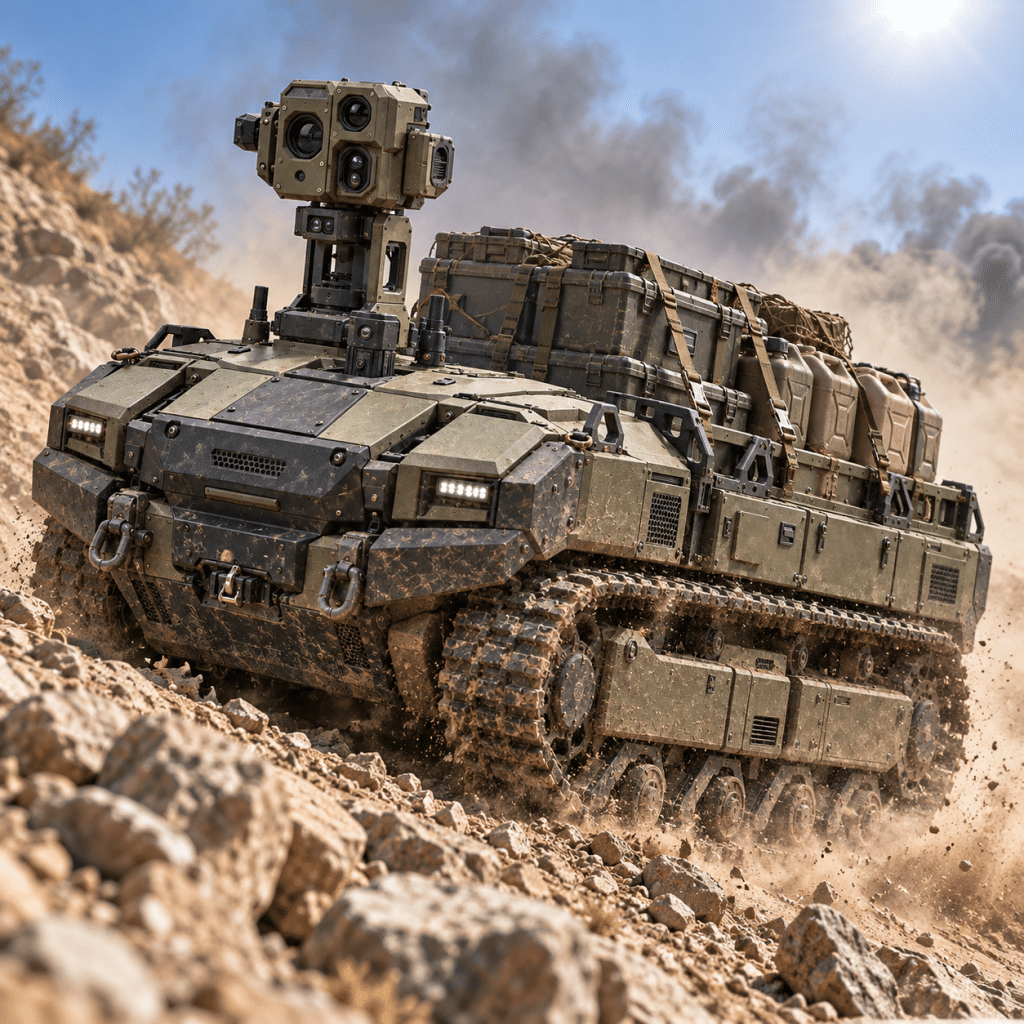
A defense startup had built a 1,600-lb autonomous ground vehicle designed to carry wounded soldiers off the front line and haul ammunition and water forward on the return trip. The autonomy stack performed well in controlled demonstrations.
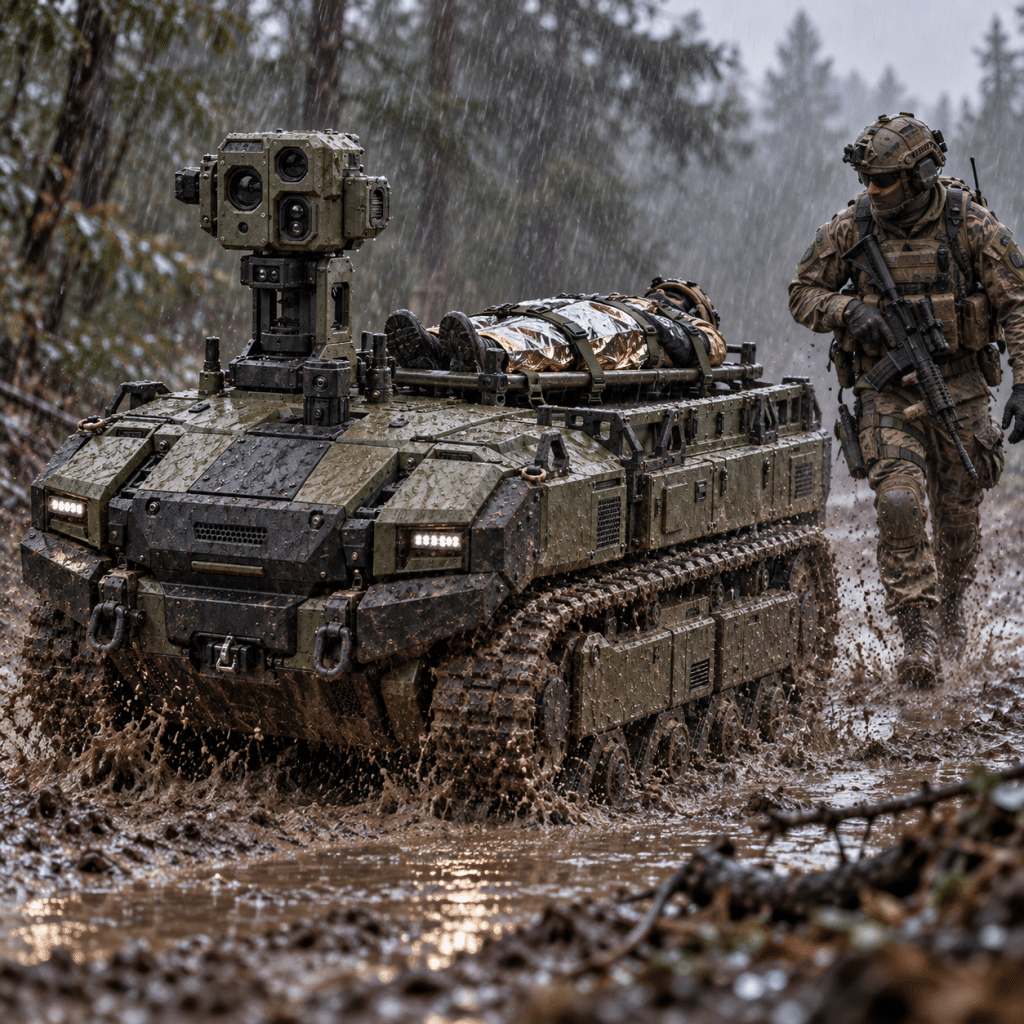
Then eight prototype vehicles spent six weeks in Army field evaluations across desert ranges and wet, wooded terrain, and the mechanical layer protecting that stack began to give out. Dust, vibration, condensation and rock strikes produced a string of faults that stranded vehicles mid-mission, and on a casualty-evacuation run, a stranded vehicle means a patient who doesn’t get out.
The company brought Fathom in to find out why the hardware was failing and to fix it before the next evaluation. Fathom’s DFM team tied each failure to a specific design decision, and suggested redesigns to sealed enclosures, sensor-controller housings, electronics tray, battery cover and EMI shields to better withstand field operating conditions.
Fathom then built the hardened parts and managed a steady stream of field-driven changes as revision-controlled updates, giving the startup a vehicle that could finish its missions in the field.
The Problem
The early prototypes were built for speed. Enclosures were a mix of off-the-shelf boxes, bent sheet metal and printed housings sized to fit the electronics on the bench, with little thought given to what a tracked vehicle does to hardware in the field.
Field evaluation logged nine mission-ending faults that traced back to the mechanical layer:
-
Temperature extremes: Desert temperature swings of more than 60°F between night and afternoon pumped dust-laden, moist air past flat gaskets that had taken a compression set. Fine grit and condensation inside “sealed” compute and radio covers corroded connectors and fouled circuit boards.
-
Vibration problems: Printed sensor-controller housings cracked at their mounting bosses under sustained track vibration, and fasteners on the electronics tray backed out, letting the tray shift and load the connectors.
-
Other issues: A rock strike cracked a thin battery-protection cover, and gaps at seams in sheet-metal EMI shields let motor-controller noise reach the GNSS receiver.
With a follow-on evaluation scheduled and a pilot production decision riding on it, the startup needed more than patched parts. It needed to understand every failure mode and close them out without compromising their launch timetable.
The Solution
Fathom’s engineers worked with the startup’s team to map each fault to a root cause, then ran a DFM review of the affected components with the field environment as the governing requirement:
-
Sealing: Fathom’s engineering teams recommended redesigns that improved the performance of seals. This included machined continuous gasket grooves into new CNC aluminum enclosure lids to hold gasket compression in a controlled range, switching to a silicone gasket rated for the full temperature span, and adding membrane pressure-equalization vents so enclosures stop breathing dusty, moist air as they heat and cool.
-
Vibration: Fathom engineers recommended redesigning the sensor-controller housings as machined aluminum with ribbed walls and generous fillets at the mounting bosses. It also recommended building the electronics tray out of formed sheet metal with stiffening flanges, isolator mounts and captive, thread-locking fasteners.
-
Impact and EMI: Fathom engineers guided the startup team to increase the thickness of the battery-protection cover with a hard-anodized finish, and to replace the sheet-metal EMI shields with photochemically machined shields featuring overlapping seams and chem-film-finished conductive gasket lands.
-
Iteration and change control: Additive fit-check prototypes went onto vehicles within days of each design change so the test team could validate geometry before Fathom committed to machining. Fathom managed 14 field-driven ECOs as controlled redlines against a single revision-controlled build package rather than requoting each one, with CMM and first article inspection at every revision and retrofit kits labeled by vehicle configuration.

The Results
The hardened assemblies went into the customer’s qualification program and then back into the field, where they changed what the vehicle could be trusted to do. Because the hardened designs were built for repeatable production from the start, the startup carried them straight into its first pilot lot with Fathom, using the same geometry, inspection history and build package it took into qualification.
-
Compute and sensor enclosures: Passed MIL-STD-810H vibration, blowing-dust, humidity and temperature-shock procedures, and IP67 ingress testing, on the first attempt.
-
Reworked EMI shields: They cleared the GNSS interference issue, and the vehicle’s radiated-emissions testing to MIL-STD-461 required no further mechanical changes.
-
Field evaluations: The follow-on field evaluation logged zero mission-ending failures in the mechanical layer across more than 2,000 combined vehicle miles, down from nine in the first evaluation.
-
Improved serviceability: Field crews service the electronics tray with standard tools, without breaking an environmental seal.
-
No ECO delays: All eight prototype vehicles were retrofitted from configuration-labeled kits, and the 14 ECOs were absorbed without stopping builds.